

Some news:
My new podcast, Feedback with Ira Madison III is out now. It’s a weekly pop culture digest unpacking the stories, internet obsessions, and debates lighting up your group chats. Joined by friends and cultural tastemakers, I’ll dive into entertainment, books, politics, media, and the increasingly online world that’s reshaping how we think, argue, and stay relevant. New episodes every Thursday.

You can subscribe now on Apple Podcasts, Spotify, YouTube, and wherever else you get your podcasts.
I. The Yesteryear Itch
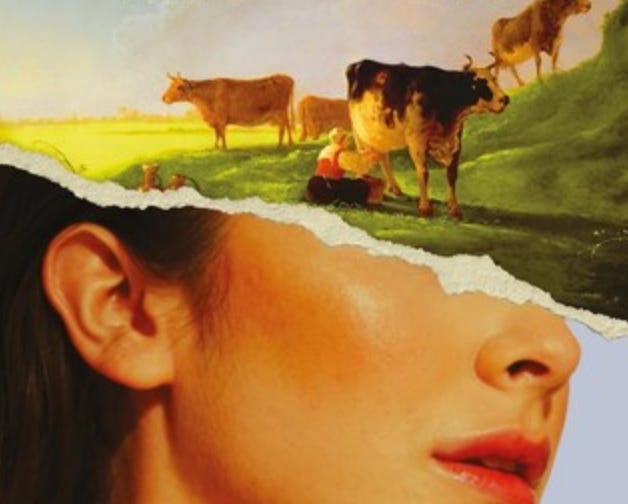
Includes spoilers for Yesteryear.
“What a bitch, huh?”
It took me a beat, but I realized the woman speaking to me on the subway platform was referring to the protagonist of Yesteryear, author Caro Claire Burke’s instant #1 NYT best seller, which was propped in my hands as I waited for a 3 train back to Brooklyn. Outside of the Bravo fandom, I was rarely invited to join in the camaraderie of calling another woman a bitch, but this was a fictional woman. And well, she is a bitch.
Yesteryear was on my radar long before its publication, due to a Deadline article in 2024 about Anne Hathaway and Elizabeth Banks bidding for its film rights pre-publication. In a since-deleted Substack note, the very much-in-the-comments Burke clapped back against accusations that Hathaway (who ultimately won the bidding war) “ghost wrote” the book. I’m sure Hathaway offered some ideas on the draft she read, but producers don’t ghostwrite the books they adapt. They just rewrite whatever they don’t like.
But back to the bitch. That would be Natalie Mills, a tradwife influencer who wakes up one morning to find herself trapped in 1855. Or, so she thinks. The draw of this book is its buzzy sci-fi-esque twist. The reality of this book is that there’s nothing sci-fi about it all; she’s not trapped in 1855. The disappointment of this book is that the premise is its worst part.
Though, to take it from the internet, the book is the WORST THING some people have read. When people dragged the previous year’s buzzy white girl books, Madeline Cash’s Lost Lambs (which I haven’t read yet) or Anika Jade Levy’s Flat Earth (which I really enjoyed), there was an air of professional jealousy. The internet wanted to know why Cash got so much press for her debut. Answer: a publicist, which you can also hire for your own books! The internet wanted to know why the launch of the Volume 0 issue with my debut short story got shunted into a launch party for Levy’s book, with nary a mention of my story and one good photo of me at the event! Okay, no one but me was wondering that, but the check more than made up for it. But the questions surrounding the quality of Yesteryear have been good old, “Is this book everyone is talking about really that fucking good?”
It’s become discourse akin to a new Taylor Swift album. Does its #1 status denote its quality? If you don’t think so, then it makes you very eager to talk shit about it with like-minded people. My friend and host of the podcast The Stacks, Traci Thomas, famously likes to say, “talking shit is good for books.” Which is perhaps why she immediately told me to text her my thoughts as I dove into Yesteryear.
Much to my surprise, given Burke’s excellent critical mind that I recall from episodes of her podcast Diabolical Lies, the book hardly feels like a novel. It’s no wonder that Yesteryear was quickly snatched up as a movie, because reading it felt like watching a summer blockbuster that lures you in with a shocking premise, and then collapses under its own weight (yes, I’ve been in the backrooms…). What I mean by this is that Yesteryear is less a story about a tradwife influencer who wakes up in 1855, but more so about making the audience believe this tradwife influencer is in 1855. And from the jump, mind you. The book flashes forward to its twist very quickly. Like, chapter one quickly. And then it jumps back and forth from Natalie’s college years, her courtship with rich idiot Caleb, and the formation of her influencer empire. Along the way, Natalie is downright evil to Caleb, her sister, her college roommate, her employees, and her fans. This is why the woman on the subway was so gleeful about Natalie being a bitch who “got what she deserved.”
I believe that Yesteryear has aspirations of exploring religious delusion, gender roles, and how social media turns us into the worst versions of ourselves. But the process of reading this book goes from whiplash at the time jumps, to tediousness once you realize the twist isn’t a sci-fi twist, to anger when you realize that the twist itself is spaced out in flash forwards because there’s not enough material to sustain it for an entire book. The film might be more successful, frankly, because it won’t be told in a first-person POV like Yesteryear, which feels a bit like scamming the reader by the end of the book. The book’s final twist is that Natalie placed herself into Yesteryear, but can’t remember any of it because of the drugs she’s taking. It’s a really exploitative way to tell such a fun premise, not to mention kind of lazy.
It’s a shame, because otherwise, I found Burke’s depiction of a people-pleaser turned diabolical monster turned red-pilled nujob to be pretty damn funny. One particular passage (which I’ve been told loses some of its fun in the audiobook) cracked me up:
Trust in the Lord with all your heart; do not depend on your own understanding. Seek his will in all you do, and he will show you which path to take.
I leaned across the table and pressed my hand over His. Sorry, I mean his. Caleb’s.
I think most people imagined someone like Nara Smith when they first heard this premise. But Natalie has no interest in becoming a model and walking in a Miu Miu show. She genuinely believes she has a higher calling than most. And she honestly believes most of the shit she preaches online, which is perhaps why her attempts to circumvent the patriarchal fantasy she’s peddling ultimately end in her downfall. I would’ve loved to see more of her assistant’s revenge plot and her Dallas-esque political struggle with her father-in-law. But alas, there’s THE TWIST. Without the twist, this could’ve been an incredibly fun and demented character study, something more akin to Raven Leilani’s Luster. But then again, literary fiction doesn’t create Hollywood bidding wars, does it?
II. Pride Month Reading List
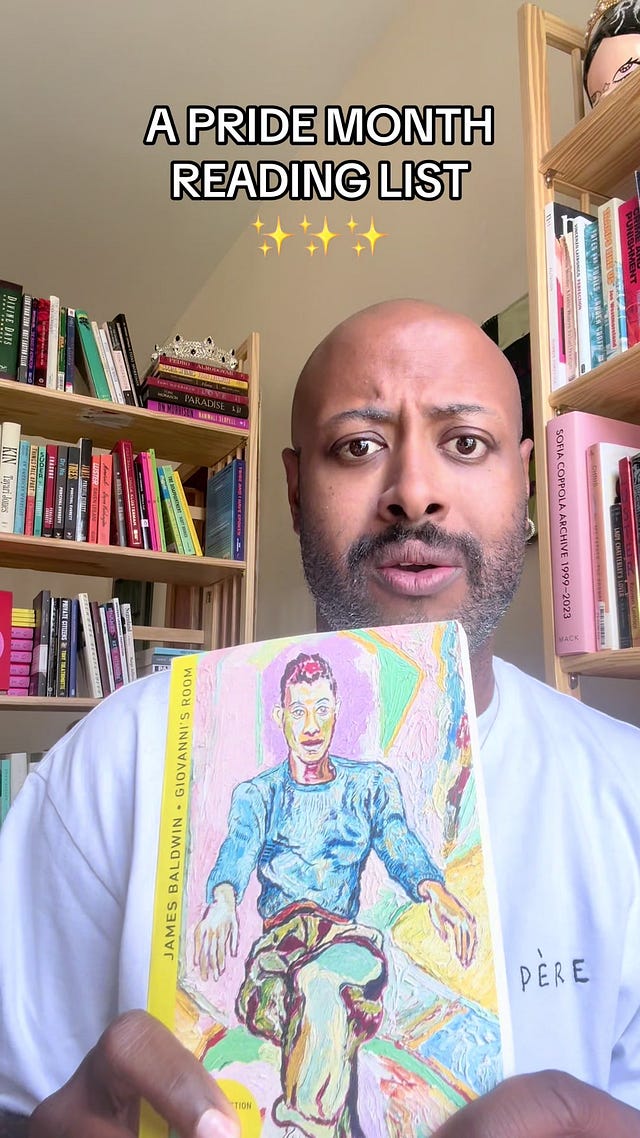
 Tiktok failed to load.
Enable 3rd party cookies or use another browser
I released my Pride Month reading list on Monday. You can watch the above video for my commentary on each selection, but here’s the full list: Black Deutschland by Darryl Pinckney. Floodlines by Saleem Haddad. The Gilda Stories by Jewelle Gomez. Giovanni’s Room by James Baldwin. I Think They Love You by Julian Winters. I’m a Fool to Want You by Camila Sosa Villada. Love is a Dangerous Word by Essex Hemphill. No God But Us by Bobuq Sayed. Pure Innocent Fun by Ira Madison III (duh!). Rock My Soul by bell hooks. There’s Only One Sin in Hollywood by Rasheed Newson. The Wilderness by Angela Flournoy.
What I Read in May
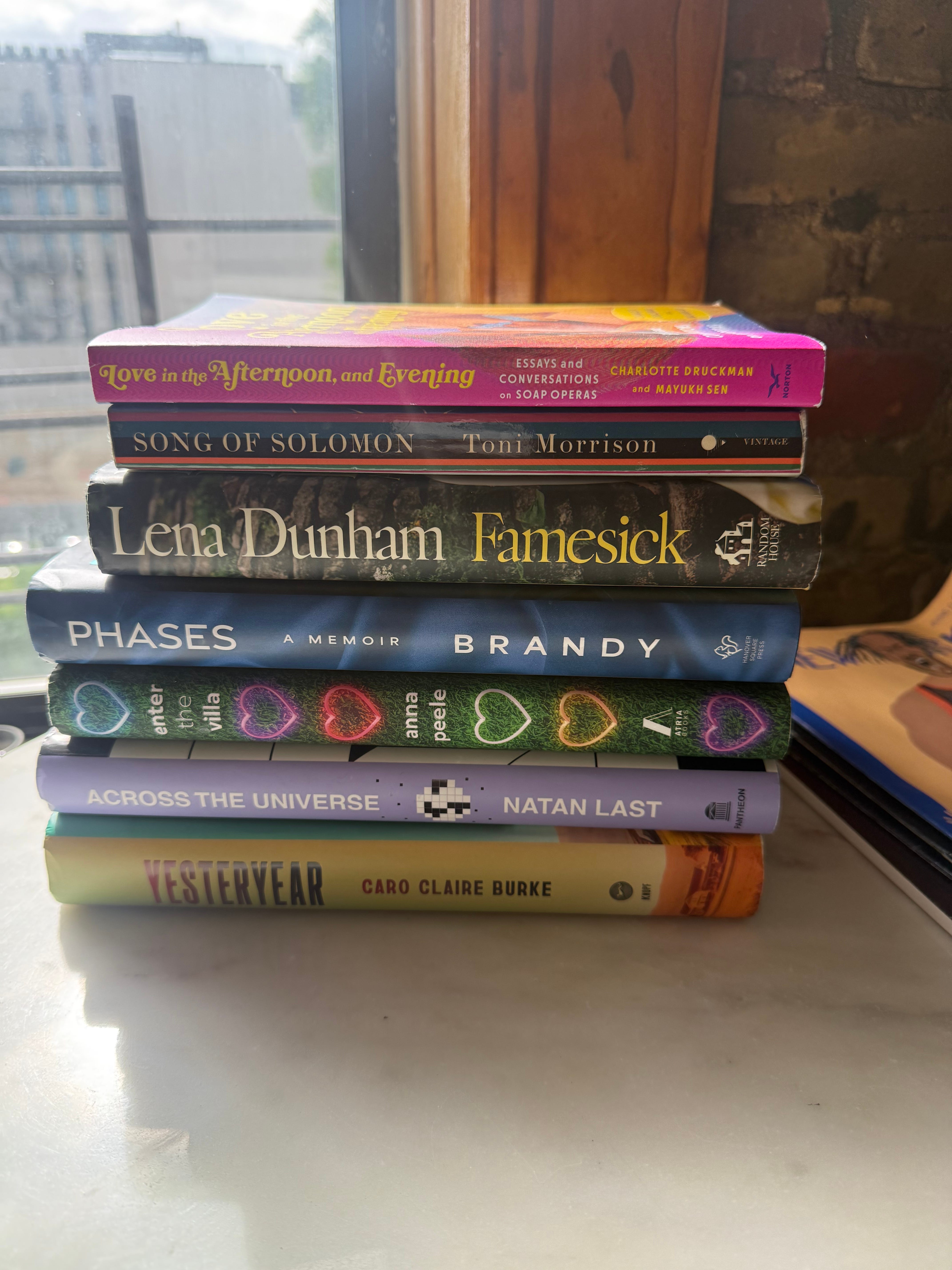
Yesteryear by Caro Claire Burke
Love in the Afternoon, and Evening: Essays and Conversations on Soap Operas by Charlotte Druckman and Mayukh Sen
Song of Solomon by Toni Morrison
Famesick by Lena Dunham
Phases: A Memoir by Brandy & Gerrick Kennedy
Enter the Villa: The (Unauthorized) Reality Behind Love Island by Anna Peele
Across the Universe: The Past, Present, and Future of the Crossword Puzzle by Natan Last
Once again, the best book I’ve read this month is from Toni Morrison. This probably isn’t fair to the other books I’m reading, but I’m almost done with my year-long goal of reading every Morrison book, so everything else will stand a fighting chance soon enough. I didn’t think anything could top my love of Sula, which came into my life after the death of a best friend. But many people have claimed Song of Solomon as their favorite Morrison book, with a particular affinity for its final line. That’s a lot to live up to. And I’ll be damned if it didn’t.
I’ve written on here about the long process of decolonizing my mind and my personal literary canon after years of attending predominantly white institutions. I wasn’t expecting Morrison to see me as much as she did in Solomon. What Sula taught me about myself and friendship, Milkman’s journey in Solomon really taught me about myself. It feels like a culmination of everything I’ve been reading and writing since I’ve had to rebuild my life after losing my apartment in a fire last fall1. As Joyce Hope Scott wrote in The Cambridge Companion to Toni Morrison, Milkman must be “spiritually reborn” by losing all of his possessions and notions of his identity. Reading Morrison this year hasn’t just given me new literature to love, it has given me a new sense of personal direction in my life and my writing. I’m grateful for this book. And the final line is everything I was promised: “For now he knew what Shalimar knew: If you surrendered to the air, you could ride it.”
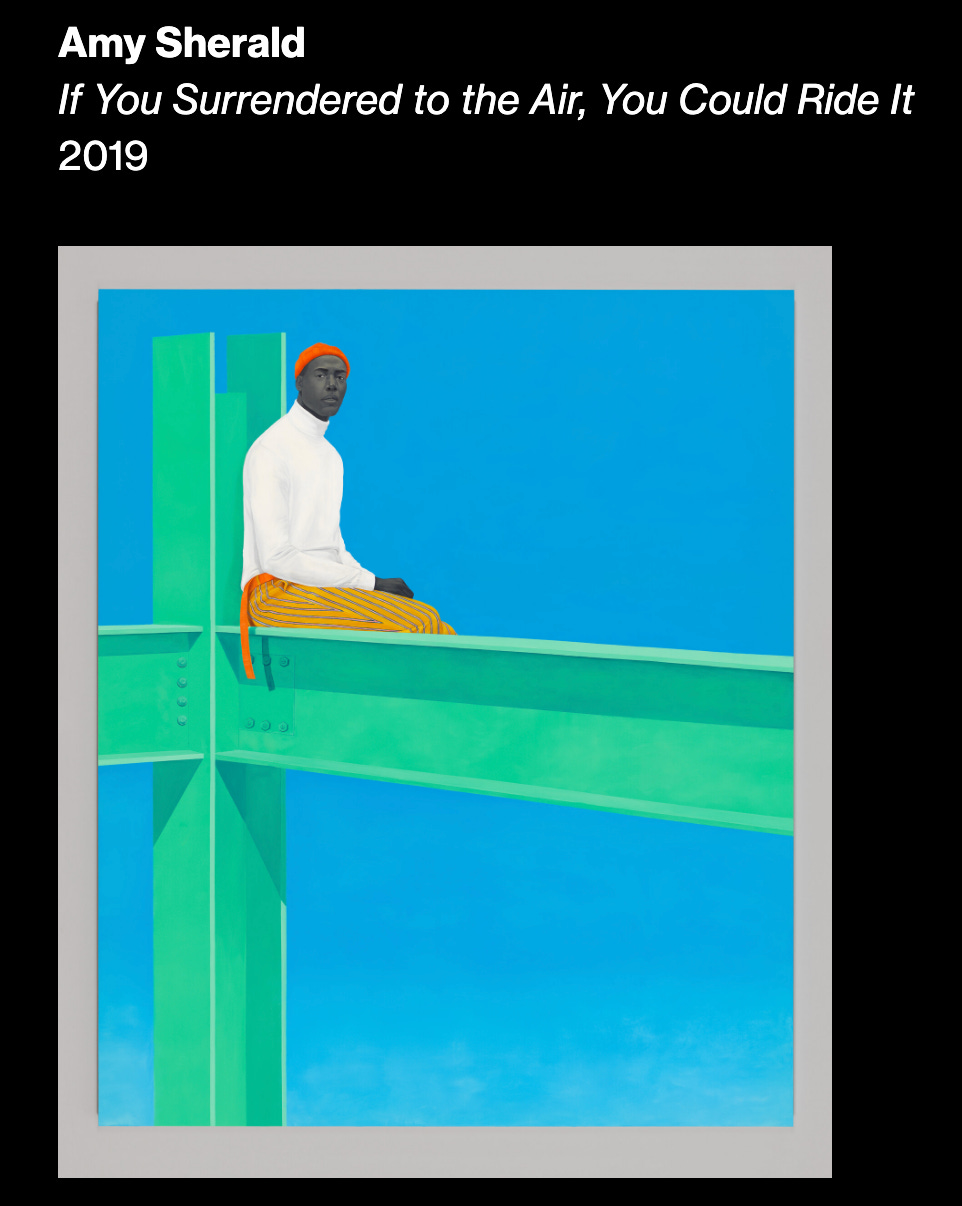
(Don’t judge me when I get a print of this Amy Sherald painting in the near future, and possibly a new tattoo.)
I also loved Famesick! And to bring things back to my new podcast, I asked Lena Dunham a question for her newsletter, Good Thing Going. She responded by suggesting that the phrase “keep it” was my “voice of a generation” moment. It’s nice to look back fondly on the origins of Keep It, and to know that someone whose writing has meant so much to me as a millennial was even aware of it.
III. Nightmare Baby Press
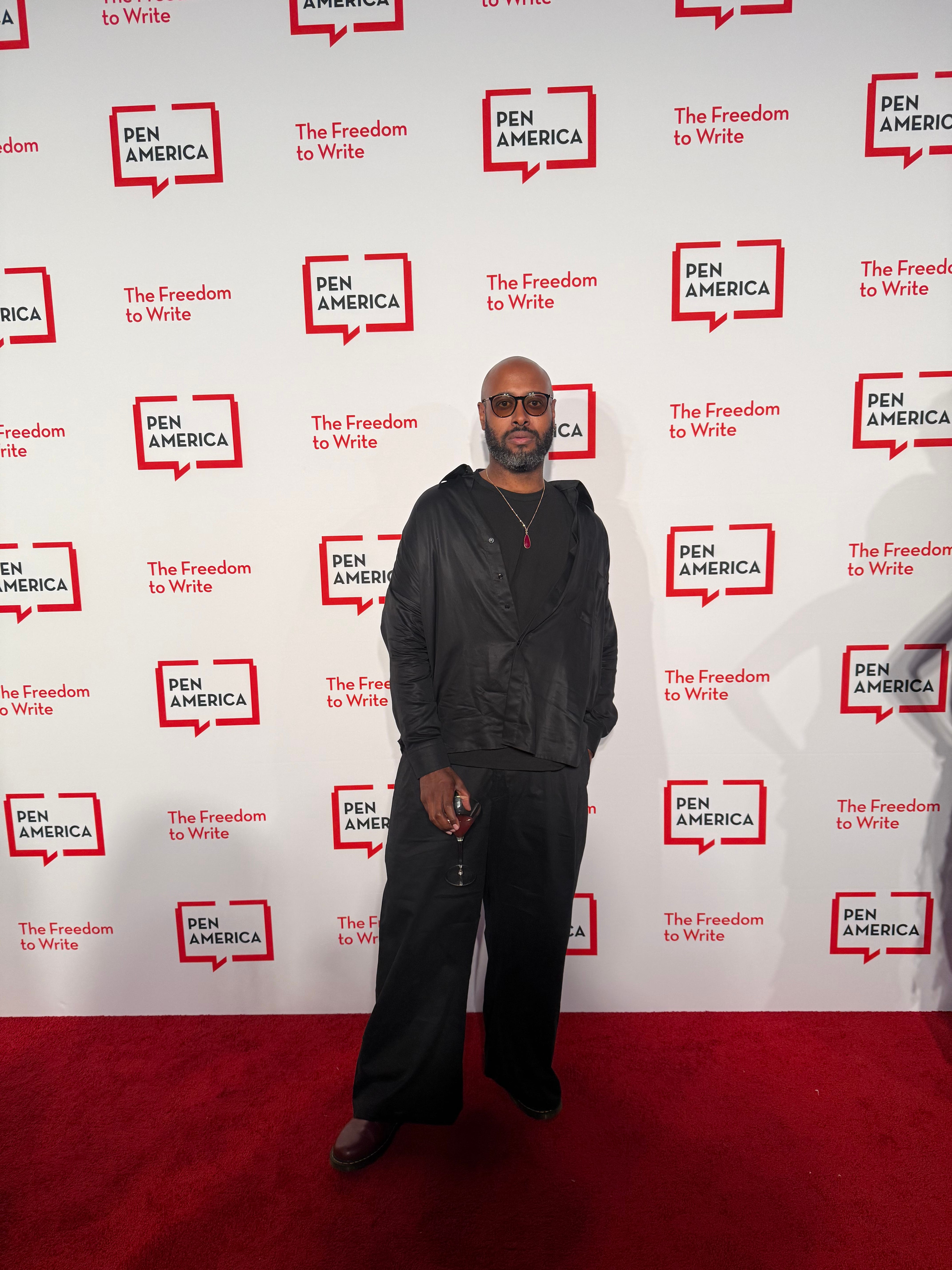
I attended the PEN America Gala at the National History Museum, which was pretty fun thanks to my friend, FSG editor Jackson Howard, being there. Everyone else I’d asked to be my +1 was either out of town or sick. I spent most of my time hunting for Dua Lipa, but I bailed on the party as soon as co-host Matt Star (of Dream Baby Press) loudly began to read one of his awful poems. About getting fingered at the museum. Chile…
I attended my friend Isaac Fitzgerald’s book launch at Books Are Magic, where he was in conversation with Roxane Gay about his new memoir, American Rambler. I learned that Isaac and I both write our first drafts by hand.
I met Percival Everett during intermission at Ragtime. I have never met an author I love so much since the first time I met Chuck Klosterman in college, so I rambled a congratulations to him for winning the Pulitzer Prize for Fiction for his novel, James, except I did not specify what I was congratulating him for and just said “congratulations” a few times, then thanked him for what The Trees meant to me.
I hosted a panel discussion for Love in the Afternoon, and Evening at PT Knitwear, which is an amazing little bookstore in the LES that I’d never visited before. About 14 people showed up, which is more than I assumed would come to a discussion for a book about soap operas on a Thursday night.
Last night, I attended the premiere of The Vampire Lestat. To no one’s surprise, it’s a fucking great premiere. I got to meet star Jacob Anderson IRL after interviewing him in 2024, where he told me he was a Keep It fan. He subscribed to Feedback during our convo, which made him the first person to subscribe to my new podcast! I’ll be buzzing about that for the rest of the month.
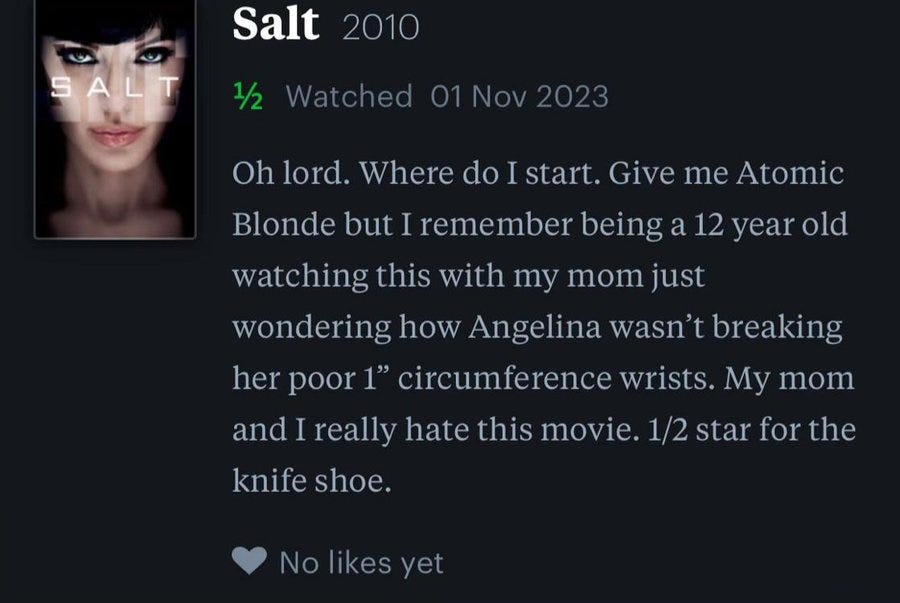
Hudson Williams was already my opp for his 1/2 star Letterboxd review of Salt… but now that he’s shared his list of favorite books on Instagram, I feel much better. Stoner (the only book every straight man you know has read this year), two Joan Didion books, two Eve Babitz books, Didion & Babitz for good measure, and Martyr. It’s giving BookTok algorithm down and says very little about his actual personality. Unless it does…
See you next Third,
Ira
In the most surreal moment of my life, the fire trucks arriving to put out my apartment fire were captured on camera by Bravo and aired in a scene in last week’s In the City. My life is officially too involved in the Bravoverse.
I read my first Toni Morrison book only a couple of years ago (Beloved), and it was an example of one of my favourite experiences in Pop culture: when you finally get around to something that's been hyped up to the nines and it still surpasses your lofty expectations. I really need to get onto her other works.
1. your writing on what toni morrison means to you is so moving. i love when the right literature finds us at just the right moments in our lives.
2. psyched for the new podcast!
3. i couldn’t believe when i saw your IG story about the fire trucks on In The City. new york really is the smallest of towns sometimes