

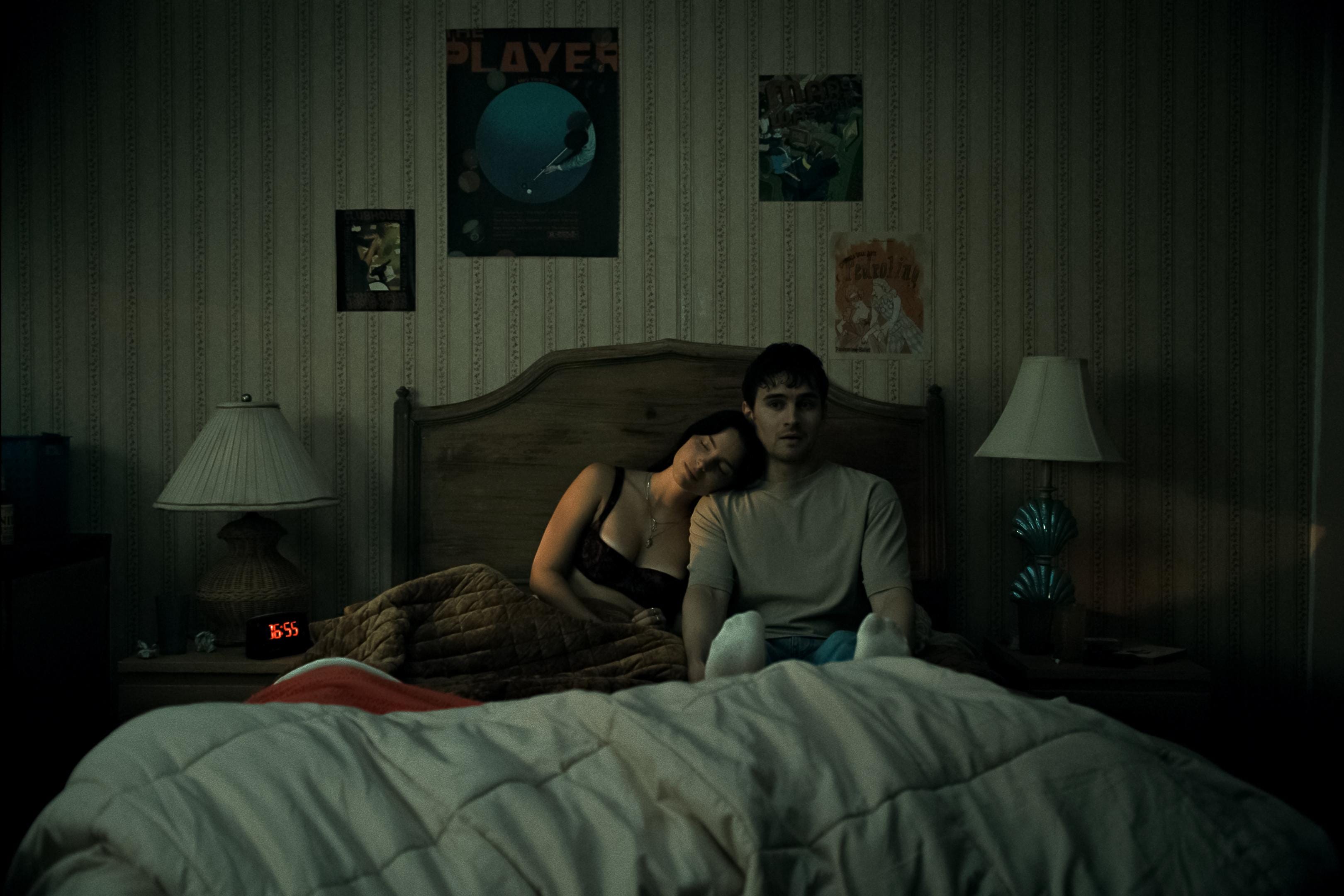
You spend the weekend in a chilly movie theater, in a chair that reclines juuussst enough to legally be referred to as a “reclining” seat, and you take in a new release. You, presumably a cinephile of some intelligence (you’re reading Frank, after all), feel as if you understood the movie 100%. Then you log online, only to discover someone has bested you in a match of wits you didn’t even know you were playing. You see a post on social media that begins with, “The REAL villain in this film is…” Horrified that you might secretly be a moron, you continue reading… only to discover that the post has described the most surface-level, obvious read of the film you’ve just watched. The person named as the “real villain” by this anonymous social media user is the film’s antagonist, which usually means yes, they are the villain! In 1950, Alan Turing posed the question, “Can machines think?” In 2026, many of us scroll the tiny machines in our hands and pose the daily question, “Can HUMANS think?”
Most recently, I fell to my knees and shouted this question to the heavens after witnessing an extreme amount of posts online sharing the never-before-heard theory that Bear, the lead in Curry Barker’s 2026 smash horror hit Obsession, is the film’s real villain. Yeah, no shit. Granted, it’s not a new phenomenon. The BuzzFeed Era of media churned out daily “The REAL villain in The Devil Wears Prada…” takes. But it’s become an increasingly more common way for someone to mint themselves an “authority” on a piece of media. At this point, on social media, there are too many takes. A generation that grew up on VH1’s I Love the… series now has access to smartphones where they can drop TikToks, Reels, or even just viral Threads sharing information about a film that they’ve either just Googled five seconds ago or made up. The internet’s attention economy rewards takes, but when there are so many takes, people look to someone with credibility on the subject.
This isn’t to say people check credentials before they engage with content online; it just means that those making the content now use phrases that indicate they know what they’re talking about. For instance, one of my favorite Survivor Australia winners, Feras Basal, launched a podcast with his mate Yaz Haddad. Rather than use his platform to, I don’t know, talk about Survivor, I recently came across a half-baked critique of Obsession on Instagram Reels. “Almost every single big scene from Obsession was copied from another horror film,” Haddad says, before sharing a clip of scenes where director Curry Barker paid homage to some of his favorite films. The YouTube-ification of film commentary – which popularized videos like “900 PLOT HOLES IN AUGUST: OSAGE COUNTY” or what the fuck ever — has far too many people convinced that a) they know what they’re talking about, or b) taking something that is not a new thing in film at all and pretending they’re the first to discover it. It’s media illiteracy that banks on media illiteracy from their audience.
Does any of this contribute to a real discussion of art? No, it just contributes to everyone wanting to be “right” about a film. It doesn’t matter what you thought of the acting, or the directing, or the writing; you have to find one specific aspect of a film to critique so that you can stake a claim in the broader online conversation. No film had done this more recently than Obsession, when I first started writing this draft. Then Christopher Nolan’s adaptation of The Odyssey debuted.
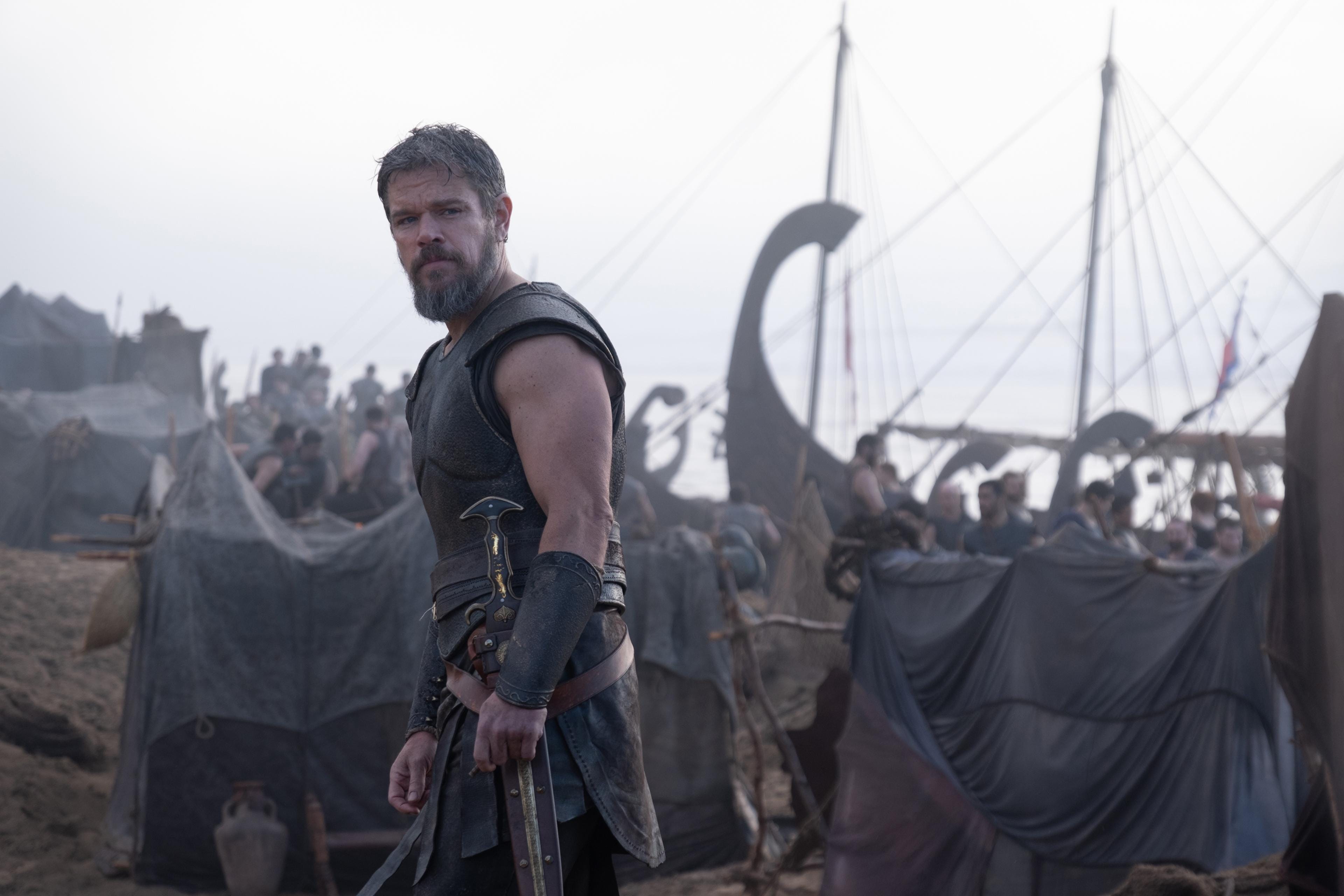
At lunch the other day, a friend told me they hadn’t seen The Odyssey yet because of “all the backlash.” I had to pause for a minute to think about which backlash they meant. IMAX being elitist? Classicist Emily Wilson eviscerating Nolan for not being faithful to her translation? Nolan’s treatment of female characters? The Odyssey has reached peak discourse.
I was more interested in the critique of The Odyssey that centered around Nolan’s lack of a co-writer for this script. Nolan’s longtime collaborator, his brother Jonathan Nolan, co-wrote each film from Batman Begins to Interstellar. Memento is adapted from “Memento Mori,” a short story written by Jonathan. Insomnia is a remake of a Norwegian film with a script from Hillary Seitz. These films are part of what Nolan fans generally refer to as his golden years. Everything since Dunkirk has been a solo writing-and-directing effort by Nolan.
Some fans genuinely believe he should’ve enlisted Jonathan to work on The Odyssey to make it “better.” It introduces a zero sum to art where the main directive is to get things “right,” rather than any genuine artistic expression. This isn’t a Marvel movie! I loved Spider-Man: Brand New Day, but it’s easier to critique the construction of these films because they are quite literally constructed to create the best possible outcome. Given that the film had the second highest box-office opening in history, it clearly worked.
Nolan’s art form is blockbusters. He works to make films that appeal to a mass audience (“I wanted to make a very accessible movie,” he told The New York Times) while also tackling the psyches of the men in the stories he tells. Nolan has been critiqued for making films about men with scant women in them. This is true. But Nolan as a director is also speaking to men in a more subtle way than getting online and sounding an alarm about the “male loneliness crisis.” Tenet, his best film1, is essentially about male friendship. In interviews, Nolan has acknowledged the similarity between The Odyssey and his previous films. He told The Los Angeles Times, I’ve been telling this story in all my films for years. It’s a family story, a love story, a revenge story, a war story, a coming-of-age story. It’s a very strong foundational text for me.”
I personally love watching an artist progress over the course of their career. It’s something that I’ve enjoyed watching in myself as an artist. I’ve been reading all of Toni Morrison’s work this year, and it’s been fascinating to go from The Bluest Eye to Sula to Love in a matter of months, to see the themes that Morrison revisits and how she chooses to tell stories differently decades later. I love prolific creators. When I discover them, it’s great to have a large body of work to dig into. I can’t wait to read more Percival Everett! I’m glad he doesn’t write one book every ten years. We might’ve never gotten The Trees.
In order for an artist to progress, they should be allowed to follow their own instincts. That means, if they’ve been itching to tell the story in The Odyssey for their entire career, they should do it themselves without needing their brother for an assist. You don’t have to like it! Art is subjective, after all. But it’s not legitimate to critique what doesn’t exist. I had a similar response to critiques of The Drama. Many people lobbied the complaint that Zendaya playing an attempted school shooter wasn’t realistic. Because Black women don’t do that. Yeah, that’s the fucking point of the film. Also, it’s fiction. Whether or not Kristoffer Borgli created a world where Zendaya’s motivations are believable is up for debate, but the very existence of those motivations can’t be outright rejected because it doesn’t match statistics in the real world. I’m beginning to think people don’t actually want art; they just want things to argue about based on pieces of their identity. Arguing “Zendaya wouldn’t shoot up a school because she’s Black” says nothing about the film, but it says everything about what you want to virtue signal to your followers about how “Black” you are. As if being Black were an astrological sign and not an incredibly diverse identity. It’s always "Black people aren’t a monolith,” until you need to prove a point in an argument.
Arguing the work on its own merits also applies to the Emily Wilson critique, by the way. Absolutely, Wilson is allowed to critique the film on how it translates Homer’s epic poem. She is a classicist, after all. But her general disdain for the medium (blockbusters) and Nolan’s interpretation (Homer’s story was written from the perspective of a rising civilization, whereas Nolan made a moral story for a civilization in decline) should’ve been left out of it. Arguing identity is something fellow academics have done in defense of Wilson, or the argument that crediting Nolan with her recent fame is misogynistic. Nolan isn’t responsible for her career. For her recent fame? Absolutely. Renewed interest in her translation (already a bestseller, yes) is for sure because of Nolan’s film. In 2026, notably, domestic sales of Wilson’s translation across all formats surpassed 1,000,000 copies. Let’s not be obtuse. That’s the entire reason authors love their work being adapted: to gain interest from a new audience. Well, not every writer.
That wasn’t a question.
That was a braving breath of fresh air Ira. Thank you. “ they just want things to argue about based on pieces of their identity” will be tattooed on my brain to help me stay sane
Loved every word in this piece, especially: "In 2026, many of us scroll the tiny machines in our hands and pose the daily question, “Can HUMANS think?”" (lol), despite the fact that I did not enjoy The Odyssey one bit and think only Memento is worth a rewatch (sorry, not sorry)