

Correction: I listed Stephanie Hayes as the author of Fallow. She was the author of The Atlantic review. Sarah Anderson is the author of Fallow.
"You are expressing envy and framing it as critique” was the shot heard ‘round the internet. Who’d reached for the gun? Not Roxie Hart, but Roxane Gay.
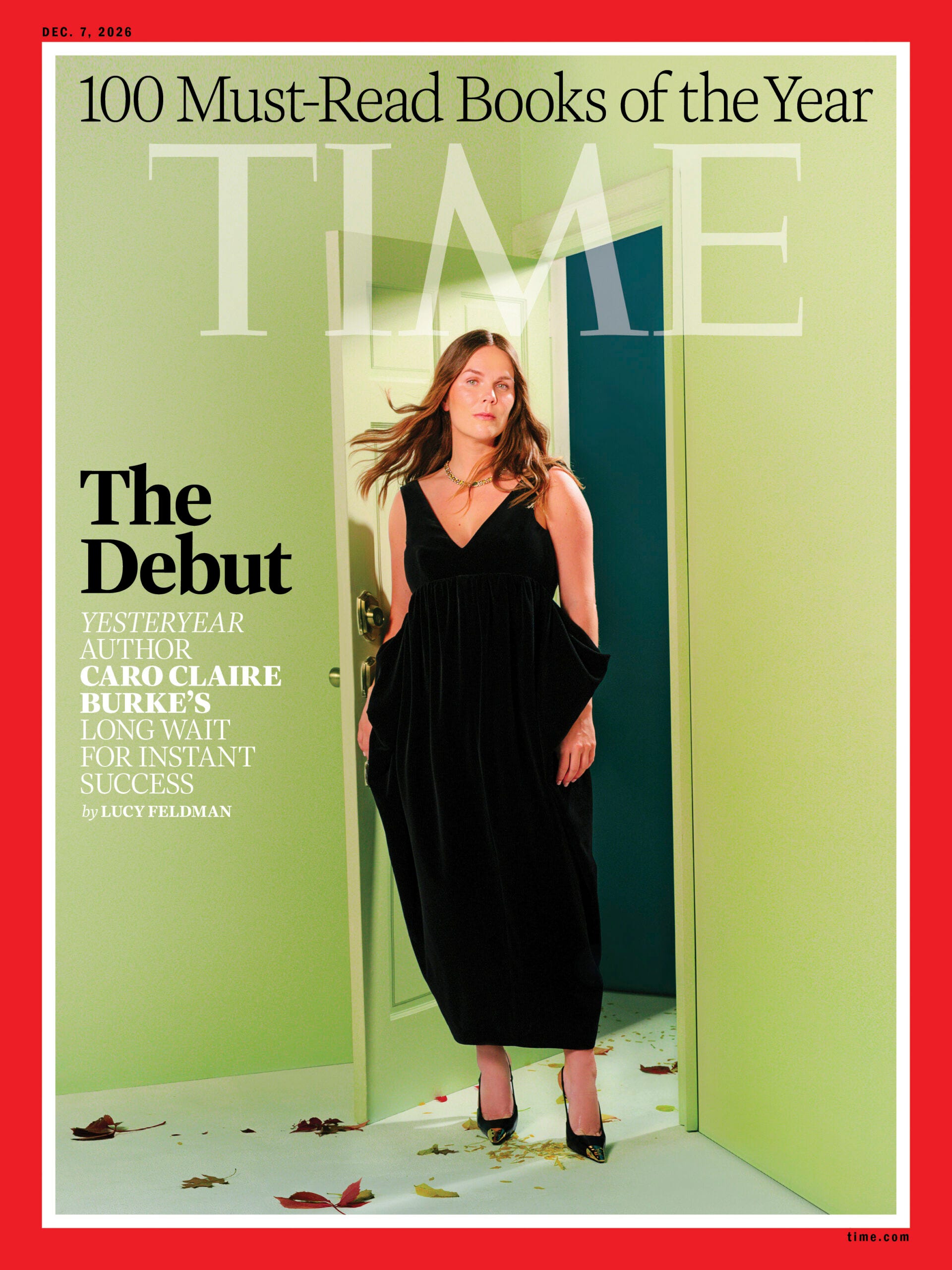
Gay’s response was prompted by a Threads user, Renee Kennedy, who posted about Yesteryear author Caro Claire Burke snagging the cover of Time. Rare for a novelist. Jonathan Franzen was the first in over a decade in 2010. Since, Colson Whitehead and Taylor Jenkins Reid have graced the cover solo. Kennedy’s comment was: “Annoyed to find out that Caro Claire Burke's husband was financially taking care of her for her whole adult life before she got her book deal for Yesteryear. That explains why the book felt ‘off’-it was a critique of a tradwife written by... a tradwife. A New England liberal tradwife rather than somebody from flyover country but like, that's just window dressing..”
Keep in mind that the definition of a “tradwife” is not “a woman whose husband financially supports their family.” Merriam-Webster defines a tradwife as “a married woman who embraces traditional gender roles and values; the word is particularly used for a young woman who chooses to be a homemaker and shares her lifestyle online. It is closely associated with a 2020s social media trend widely viewed as ultraconservative.” There is nothing tradwife about Burke, who has a successful podcast, Diabolical Lies, that routinely critiques tradwife culture.
“You are expressing envy and framing it as critique” is the perfect response to Kennedy’s comment because if the reason you sensed the book was “off” was because of Burke allegedly being a tradwife, then you’re a very bad fortune teller. Gay’s further response was: “Some people have high-earning spouses and the immense privilege of not having traditional employment. I wish everyone had economic privilege and better choices and her reality won't speak to everyone. She (who I don't know) isn't suggesting that. She wrote a book! Love or hate it or in between but her marriage isn't particularly relevant because she wrote fiction.”
It’s unfortunate that much of the response to Burke’s novel has been misogyny. When people aren’t bringing up her personal life as a reason to dislike Yesteryear, they’re dismissively putting her down to uplift other women like The Atlantic did in their review of Sarah Anderson’s Fallow: “Like Yesteryear, but better.” The books aren’t even remotely similar.
Burke responded in a series of Instagram stories: “Love when a publication creates a clickbait title to pit two debut female novelists against one another so users can fight in the comments about which book is better.” Burke is absolutely right, though I fear she played right into The Atlantic’s new editorial strategy: clickbait. Whether through ad nauseam takes about how no one is reading anymore or Tom Nichols whining about Robert Pattinson being the new James Bond, arguing in the comments is how The Atlantic gets its clicks now.
I’ve long thought that the response to Yesteryear has been exhausting. I’ve rarely seen anyone talk about the damn book instead of its author. It sold over 3.5 million copies worldwide. Someone has to have read the book, yes? Well, I did this summer.
I was simultaneously reading while dabbing sweat from my forehead on a hot subway platform, smudging the pages of my copy of Yesteryear with my wet fingers when I heard someone say:
“What a bitch, huh?”
It took me a beat, but I realized the woman on the subway platform had noticed me reading Yesteryear and was referring to Natalie, the book’s protagonist. Outside of the Bravo fandom, I was rarely invited to join in the camaraderie of calling another woman a bitch, but this was a fictional woman. And well, she is a bitch.
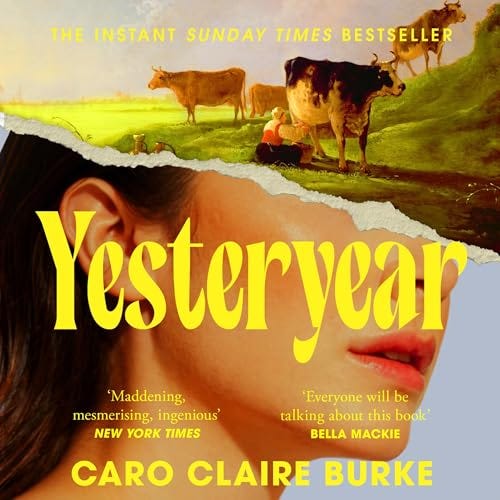
Yesteryear was on my radar long before publication, thanks to a 2024 Deadline article about Anne Hathaway and Elizabeth Banks bidding for its film rights pre-publication. In a since-deleted Substack note, the very much-in-the-comments Burke clapped back against accusations that Hathaway (who ultimately won the bidding war) “ghostwrote” the book. I’m sure Hathaway offered some ideas on the draft she read, but producers don’t ghostwrite the books they adapt. They just rewrite whatever they don’t like.
But back to the bitch: Natalie Mills, a tradwife influencer who wakes up one morning to find herself trapped in 1855. Or, so she thinks. The draw of this book is its buzzy sci-fi-esque twist. The reality of this book is that there’s nothing sci-fi about it all; she’s not trapped in 1855. The disappointment of this book is that the premise is its worst part.
Though, according to the internet, the book is the WORST THING some people have read. When people dragged the previous year’s buzzy white girl books, Madeline Cash’s Lost Lambs (which I found funny, but didn’t personally love) or Anika Jade Levy’s Flat Earth (which I really enjoyed), there was an air of professional jealousy. The internet wanted to know why Cash got so much press for her debut. Answer: a publicist, which you can also hire for your own books! The internet wanted to know why the launch of the Volume 0 issue with my debut short story (“Selling Vermont”) got shunted into a launch party for Levy’s book, with nary a mention of my story and one good photo of me at the event! Okay, no one but me was wondering that, but the check more than made up for it. But the questions surrounding the quality of Yesteryear have been good old, “Is this book everyone is talking about really that fucking good?”
It’s become discourse akin to a new Taylor Swift album. Does its #1 status denote its quality? If you don’t think so, then it makes you very eager to talk shit about it with like-minded people. My friend and host of the podcast The Stacks, Traci Thomas, famously likes to say, “talking shit is good for books.” Which is perhaps why she immediately told me to text her my thoughts as I dove into Yesteryear.
Much to my surprise, given Burke’s excellent critical mind and my love of her podcast Diabolical Lies, the book hardly feels like a novel. It’s no wonder that Yesteryear was quickly snatched up as a movie, because reading it felt like watching a summer blockbuster that lures you in with a shocking premise, and then collapses under its own weight (yes, I’ve been in the backrooms…). What I mean by this is that Yesteryear is less a story about a tradwife influencer who wakes up in 1855, but more about making the audience believe this tradwife influencer is in 1855. And from the jump, mind you. The book flashes forward to its twist very quickly. Like, chapter one quickly. And then it jumps back and forth from Natalie’s college years, her courtship with rich idiot Caleb, and the formation of her influencer empire. Along the way, Natalie is downright evil to Caleb, her sister, her college roommate, her employees, and her fans. This is why the woman on the subway was so gleeful about Natalie being a bitch who “got what she deserved.”
I believe that Yesteryear has aspirations of exploring religious delusion, gender roles, and how social media turns us into the worst versions of ourselves. But the process of reading this book goes from whiplash at the time jumps, to tediousness once you realize the twist isn’t a sci-fi twist, to anger when you realize that the twist itself is spaced out in flash-forwards because there’s not enough material to sustain it for an entire book. The film might be more successful, frankly, because it won’t be told in a first-person POV like Yesteryear, which feels a bit like scamming the reader by the end of the book. The book’s final twist is that Natalie placed herself into Yesteryear, but can’t remember any of it because of the drugs she’s taking. It’s a really exploitative way to tell such a fun premise.
It’s a shame, because otherwise, I found Burke’s depiction of a people-pleaser turned diabolical monster turned red-pilled nujob to be pretty damn funny. One particular passage (which I’ve been told loses some of its fun in the audiobook) cracked me up:
Trust in the Lord with all your heart; do not depend on your own understanding. Seek his will in all you do, and he will show you which path to take.
I leaned across the table and pressed my hand over His. Sorry, I mean his. Caleb’s.
I think most people imagined someone like Nara Smith when they first heard this premise. But Natalie has no interest in becoming a model and walking in a Miu Miu show. She genuinely believes she has a higher calling than most. And she honestly believes most of the shit she preaches online, which is perhaps why her attempts to circumvent the patriarchal fantasy she’s peddling ultimately end in her downfall.
But there’s also a general coyness when it comes to depicting Natalie’s religion. She believes what she preaches online, but what does she really believe? Burke’s decision to make Natalie’s religion non-specific hurts the book, in my opinion. It feels ill-explored, especially in comparison to the hefty critique of tradwives and conservatism in Burke’s podcast. I could understand the desire not to have the book bogged down by social milieu, as is the style of authors like Rachel Cusk.
In Book Forum, Cusk’s removal of place is critiqued. “I sometimes think Cusk leaves out proper nouns for the same reason fashion designers eschew buttons on bias-cut silk: too many capital letters would ruffle the purity of the line. A more substantive reason might be that she is chasing ‘pure experience,’ which William James defined as ‘a that which is not yet any definite what.’ Proper nouns do irrevocably turn that into what—or worse, into who. But Cusk, quite unlike James, conflates identity with character, giving rise to certain textual ironies, if not contradictions. Her narrators are bemused by the ‘bright and sleek’ cafés that are suddenly ‘everywhere’—outposts of a new global ordinariness—because they look devoid of history yet are always full: ‘perhaps people find the absence of character easier.’ Yes, so do her readers. There is commercial value in her refusal to properly name things, which is also a refusal to historicize. It makes her novels feel instantly timeless.”
But lack of a discernible religion doesn’t make Yesteryear feel timeless. It makes it feel vague. Combined with the twist, the vague focus on Natalie’s beliefs adds to the rushed quality of the book. It feels churned out. I would’ve loved to see more literary exploration of the assistant’s revenge plot and Natalie’s Dallas-esque political struggle with her father-in-law. But the novel’s exciting plot points aren’t fully explored because of THE TWIST. Without the twist, this could’ve been an incredibly fun and demented character study, something more akin to Raven Leilani’s Luster or Emma Cline’s The Guest or Miranda July’s All Fours. But does literary fiction create Hollywood bidding wars?
As a fan of the Diabolical Lies podcast, I was also disappointed by this book. For me the letdown came from the lack of research - which is one of the things that makes DL so fantastic. It felt like she wasn’t interested in giving us any sort of in-depth look into anything - not Natalie’s religion, not mental health, not even tradwives! It all felt very surface, in a way that left me feeling underwhelmed.
As someone who didn't look up the author before jumping into the book for the hype’s sake, I hated the book for both the gap between what was promised and what was ultimately delivered and the execution of that plot. Honestly, she deserves to be on the cover with the conversations around the book, the pre-publication movie deal and whatnot. But people who have reviewed the book, most of them, see the horrible execution for what it is.