

I dropped by the private members' club at The Twenty Two on Friday night to visit a friend, only to find it flanked by a throng of people attempting to get in. This is because Justin and Haley Bieber were inside The Twenty Two. I was whisked into the club by the doorman and met my friend upstairs, where there was an (impromptu) listening party for Swag II, the recently dropped follow-up to his album Swag.
Bieber bopped about the room, going from the DJ to his table, vibing to his music. Hailey was planted at the table near us, while my friends and I slurped down espresso martinis and tried scanning the room to find other celebrities. I only spotted Lori Harvey and someone who looked like Lara from Katseye, but probably wasn't. It was a fun moment, but I wasn't trying to hear all that (I find the album kind of a retread), so I popped out onto the patio for a cigarette. I made it back to our table in time for the DJ to switch over to the superior Swag. "Yukon" is that girl. A random Australian girl popped by our table to ask if she could finish our espresso martinis, as the bar was no longer serving cocktails, only mixed well drinks. I turned her away, then she insisted she was going to tell Biber, "We're all tired of hearing the album." I don't know if she did, but the music did change over to Sean Paul thirty minutes later, and Bieber and his crew made their exit.
Members' clubs are all the rage in New York right now. I recently met someone designing one in Midtown for the theatre crowd. Kith just opened one with Erewhon smoothies. Chez Margaux and San Vicente Bungalow have taken up residence in the West Village. It's a place for the wealthiest New Yorkers, celebs, or new money wannabes to mingle and enjoy exclusivity. It used to be that you could spot celebs at the hottest clubs and restaurants in the city, but more and more they're choosing to cloister themselves from the general public.
Granted, there are still some chic clubs whose only entry requirement is passing a fierce doorperson — People's is my favorite — I spotted Maggie Rogers and Chace Crawford there the other night. Jean's is also fun; my friend Alex Chapman hosted a party there on Thursday with Zara Larsson and Tiffany Pollard, but the door and some of the staff at Jean's are so aggravating that it's a chore even to attend your own friends' events.
But for the most part, while social media has given us all more access to one another, celebrities and the rich are seeking more ways to remove themselves from public life. The divide has never been clearer in New York than in the ongoing war waging between ultra-wealthy New Yorkers and Zohran Mamdani. The bridge has never been more apparent than in Spike Lee's latest film, Highest 2 Lowest, where it finds Lee in his continued embrace of conservative values. Sure, Lee has endorsed Mamdani for mayor. And he's still very much pro blackity black. But the film reveals an embrace of Lee's position in society and the annals of filmmaking than it actually reveals anything about what it's like to be a New Yorker at this moment in time.
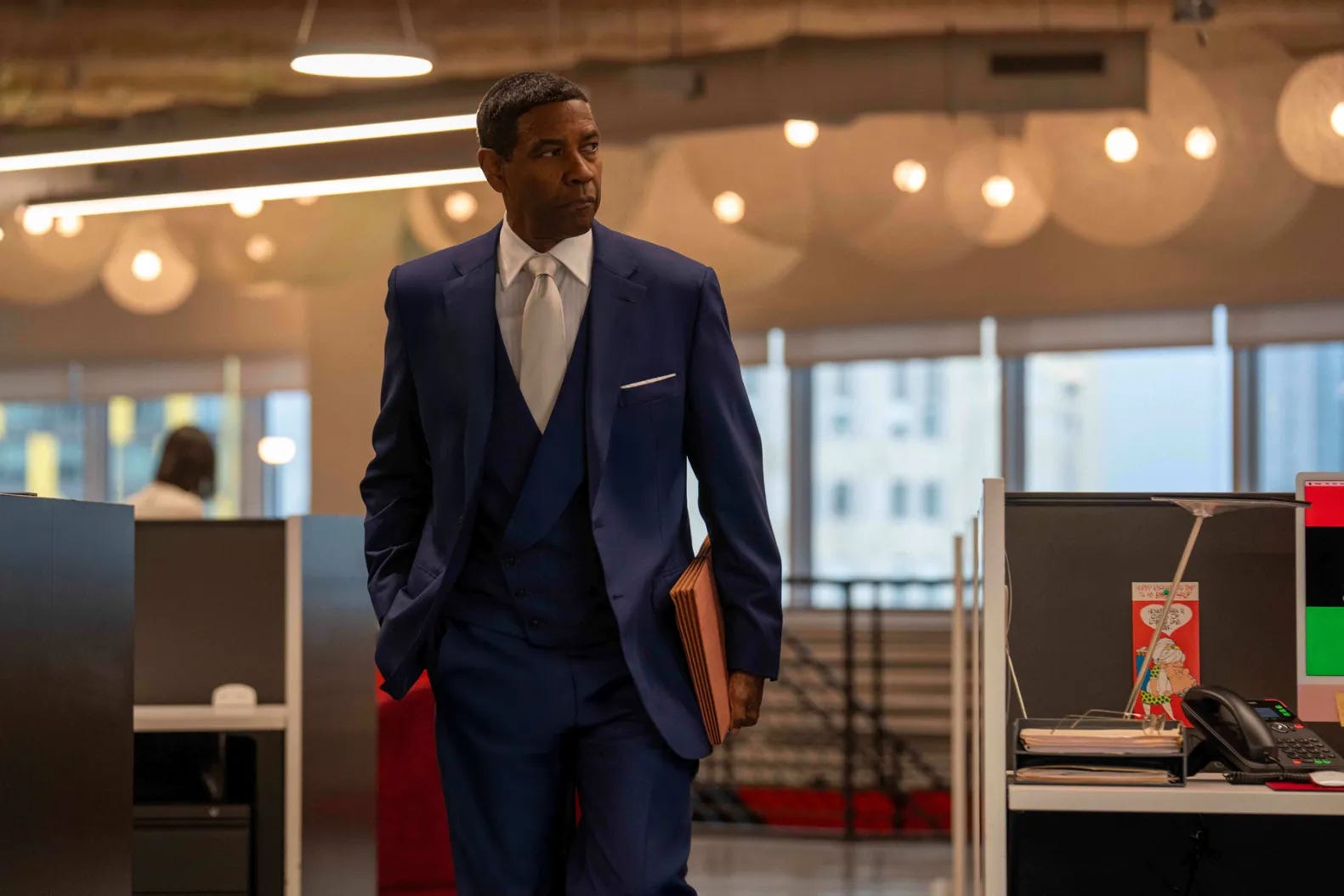
In the film, Denzel Washington portrays music producer David King, whose intentions of attaining majority ownership of Stackin' Hits, the record label he created, are halted when his son is seemingly kidnapped. Things go from bad to worse when it turns out the kidnapping victim is actually the son of his chauffeur Paul (Jeffrey Wright). King is faced with a moral dilemma of handing over $17.5 million to a kidnapper for his friend's son and imagines the public backlash if he doesn't. Highest 2 Lowest is based on Akira Kurosawa's High and Low, which is a phenomenal piece of filmmaking. I'm not well-versed in Kurosawa enough to proclaim it his best — I've only seen Seven Samurai, Rashomon, and Ran — but it's certainly my favorite.
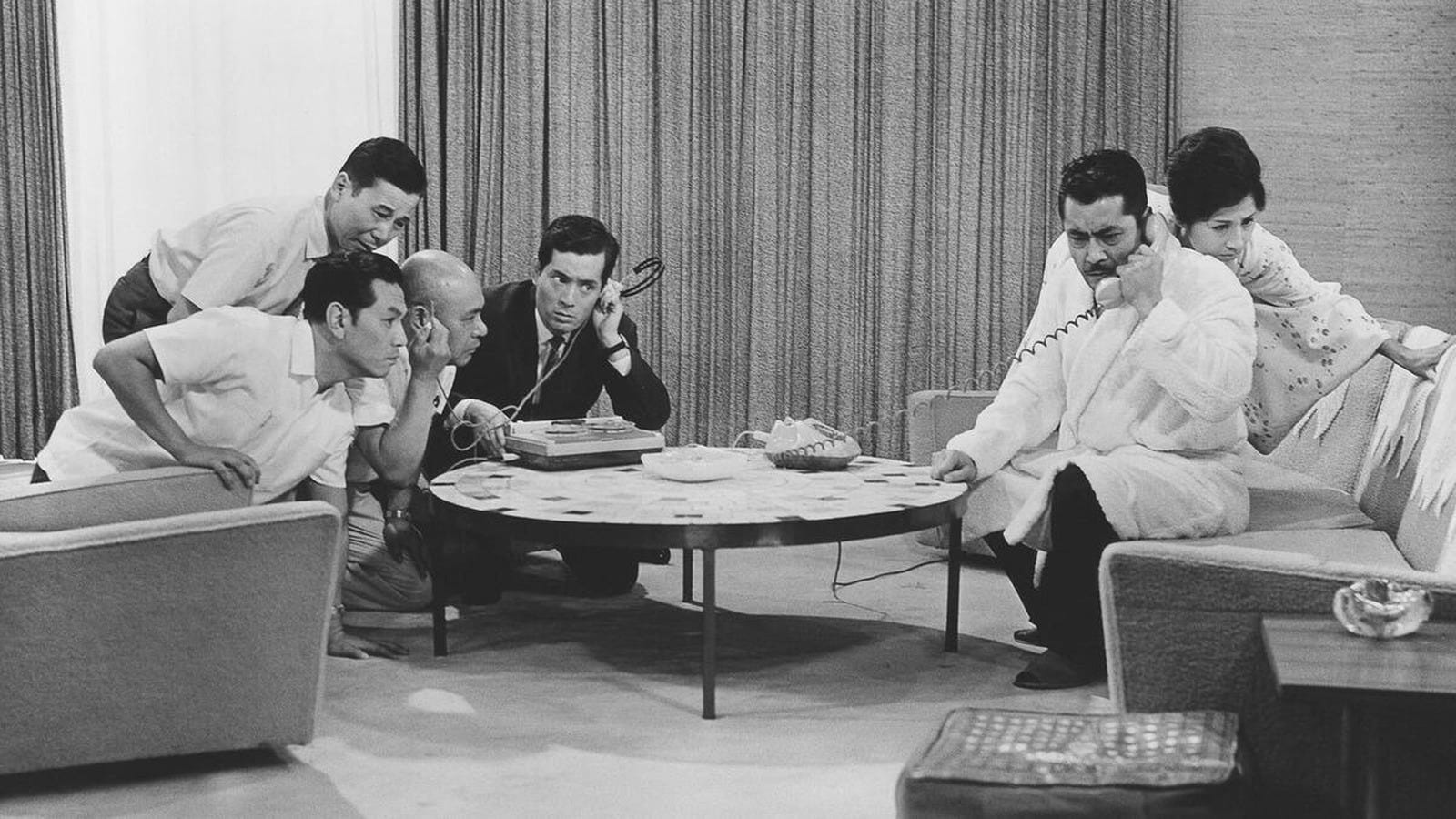
In High and Low, Kurosawa offers a searing class critique that is absent from Lee's film. Washington's King turns vigilante when the police don't recover his lost money quickly enough. In Kurosawa's original, Kingo Gondo (Toshiro Mifune) mostly drops out of the film's action after the ransom dropoff. He also loses control of his shoe empire and has to start over with a new company. But the police continue the investigation to recover his money, devoting the resources of the full Osaka police force. Protecting a wealthy man like Kingo is their civic duty. And as for the chauffeur Aoki (Yutaka Sada), he lashes out at his own kidnapped son for not being able to remember details of his kidnapper and grovels to his boss, embarrassed that his own son's kidnapping has cost his boss money. The way the film moves through the city shines a light on several aspects of Japanese culture in the early 60s: Kingo's lavish apartment is an envy-inducing eyesore, heroin dens are isolating and depraved, and gin joints are full of U.S. soldiers.
Highest 2 Lowest continues Lee's trend of making films that are love letters to New York — The 25th Hour, which recently screened at the Cherry Lane Theater on Monday, is a post 9/11 gift to New York and one of his best films, but fails to tell a real story of anyone living in the city. A Puerto Rican Day Parade scene appears for no other reason than to put Rosie Perez and Anthony Ramos on screen dancing to Eddie Palmieri. The police racing to catch a kidnapper amidst the parade doesn't say anything thematically. Though it did make me think of the Seinfeld episode where Jerry and his friends get trapped in parade traffic en route home from The Hamptons. So maybe it's about how parades in the city are kind of a nuisance.
The real themes of Highest 2 Lowest seem to be reckoning with the past. King wants to reclaim his legacy as the "best ears in the business," and comes up against drill rapper A$AP Rocky's Yung Felon, who accuses him of turning his back on his community and not embracing new forms of hip-hop. The film ends with a clear repudiation of Yung Felon's music and King signing an Alicia Keys-esque singer to his new label. In Do the Right Thing, Lee embraces the aesthetics of hip-hop, particularly Public Enemy's "Fight the Power." But perhaps Lee thinks that hip-hop actually meant something then and now, songs like Yung Felon's "Trunks" are beneath the culture. Maybe, but it's the only song I had on repeat after watching the film. "Pack out the trunk from the front to the back," is a catchy ass lyric.
A deeper exploration of the friction that exists between hip-hop's history and present could have made the film soar. In the '90s, Lee's films felt born from kitchen table and barbershop discussions. Police violence. Interracial dating. Black culture's exploitation in the media. But now, his films are increasingly more about Lee's current economic status. King has no real opinion on the society he lives in, aside from thinking the people on social media who talk about him are annoying. In a way, he's an avatar of Lee, who has approached a "get off my lawn" mentality in his filmmaking lately.
Recall his response when Boots Riley critiqued BlacKkKlansman's glorification of the police in the midst of Black Lives Matter. (He’d probably hate the sexy cops in Sabrina Carpenter’s VMA performance!)1 Lee said he was done engaging with other prominent voices in Hollywood on his own work (ironic, given his critiques of Tyler Perry): “I’m a young chap, a young man aged 61, but before I was even a younger chap. Now, when I get a hint that this stuff is maybe going to dilute the message of my film, I know it is not going to do me any good to comment.” According to Riley, he ran into Lee at an event some time later, and Lee shouted at him, "I'm Miles Davis and you're Chet Baker!" To Lee's credit, he did later approach Riley and tell him their beef was squashed.
The Miles Davis response says it all, however. Lee is the GOAT, he's the arbiter of cool, and Riley is not. In his eyes. It's why he can adapt Kurosawa films. It's why King's house is populated with work from Jean-Michel Basquiat and Kehinde Wiley. It's why he can make Highest 2 Lowest an ad for AirPods Max. Kidding. Sort of. But Highest 2 Lowest mostly references shit Lee finds cool. When it works, it's amazing — and his re-interpreation of the train scene in High and Low is truly thrilling. But when it doesn't work, it really doesn't work. Like opening the film with "Oh, What a Beautiful Mornin" from Oklahoma! Very puzzling.
Plenty of directors do shit just because it's cool. It's why we watch movies. Quentin Tarantino has made a career out of referencing movies he loves and skipping cultural commentary. But Lee has always positioned himself as a man in tune with culture. He's stayed vocal about this for years. Unfortunately, he's run out of things to say about culture. But he has a lot to say about himself, which is also incredibly fascinating, coming from a director (for instance, late-stage Pedro Almodóvar is all about embracing aging and the loss of body autonomy). If Lee's early era was righteous politics and exploring black culture, and his middle era was cool genre flicks like Inside Man, then his new era seems to be an exploration of his own life. King might as well be a stand-in for Lee, staking claim on his legacy while newer black voices populate the cinema. Let's just hope that in his next film, he goes a bit deeper into his own psyche. Highest 2 Lowest might be a fun remake of Kurosawa's film, but they are far from in conversation with one another.
The III-wind
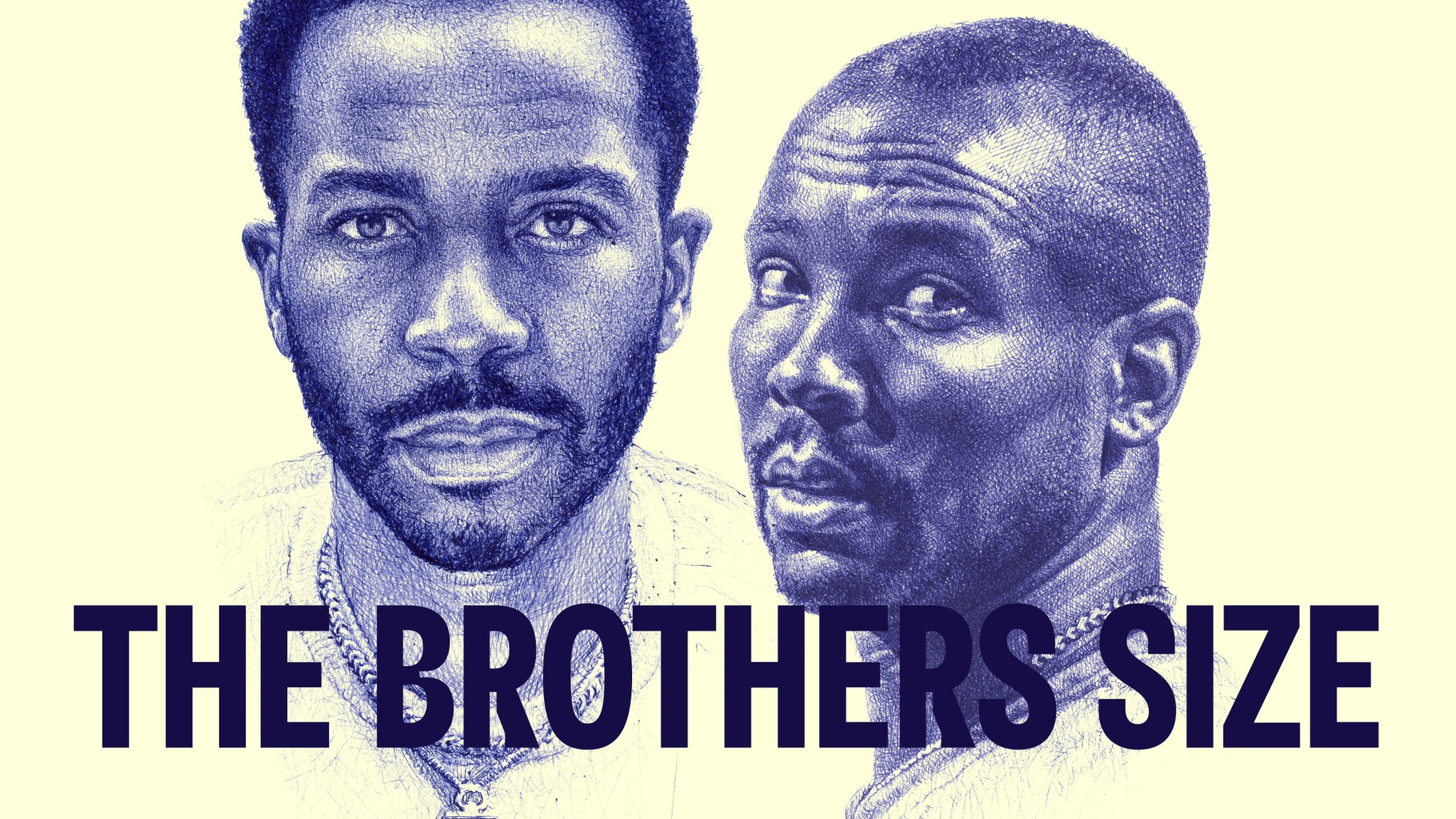
My friend Tarell Alvin McCraney’s fantastic play The Brothers Size (I’ve read, but haven’t seen this production yet) is currently playing at The Shed till September 28. See it because it’s amazing and obviously because André Holland is in it. The last time I saw Holland on stage was in Jitney on Broadway in 2017, when I interviewed him for MTV News.
Since Viacom deleted all its MTV News archives, here’s that 2017 interview in its entirety:
André Holland is Changing the Future of Black Men in Hollywood
Originally published: February 3, 2017
André Holland isn't interested in how Hollywood sees black men. As a Southern boy who ended up attending New York University for his master's degree, he's incredibly measured when it comes to talking about his career. It's a drive I recognize: My own family is from the South and I, too, attended NYU for my master's. It's a hall that not many black men have passed through, but those who do come out with a drive to grab the world in their fists. It's why his résumé includes pivotal roles in the mesmerizing and emotional Oscar-nominated Moonlight, starring roles in The Knick and American Horror Story, and now a turn on Broadway in one of August Wilson's most powerful plays, Jitney.
Written in 1979, it took Jitney nearly four decades to have its Broadway debut at the Samuel J. Friedman Theatre. The production stars Holland, who previously starred in Wilson's Joe Turner's Come and Gone during its 2009 Tony-winning Broadway revival. Both works are part of Wilson's 10-play cycle that chronicles the black experience in America over the course of the 20th century.
Jitney tackles racism, the effect of the prison-industrial complex on black men, and gentrification, among other topics; it feels just as powerful and as relevant in the black community today as it did in 1979. It’s fitting, then, that Holland, who has meticulously picked some of the best roles available to black men in Hollywood, plays Youngblood, a Vietnam veteran who's trying to build a life for himself in America but finds the deck stacked against him.
Jitney means a lot to me. One monologue in particular sticks with me: In the second act, Youngblood talks about how the world sees him one way and will never let him change. Years later, black men in America and in Hollywood are still seen one way. They're not allowed to be three-dimensional, to possess the type of empathy that Wilson's characters often exhibit — the kind of empathy Holland showcased in Moonlight, in what might've been the first time I'd ever seen an emotional relationship between two black men in a film. Holland brings that same compassion to Youngblood, making a character written in 1979 — one that I studied for a semester in school and only ever saw on the page — come alive as a bona fide metaphor for the black male experience in America. MTV News caught up with Holland in the midst of rehearsals for Jitney, just before its Broadway debut on January 19.
[This interview has been edited and condensed for clarity.]
Now that we're in the midst of awards season, how does the response to Moonlight feel to you?
André Holland: It feels great to me, man. This is a story that, obviously, needed to be told and that people have a thirst for. I feel really proud to have been a part of helping to get this story out there. The timing of it all — this movie coming out in this election year — is a great counterpoint to a lot of the ignorance and meanness that we see in the world. At the heart of the story, it's really about love — a love between people — but also about what that costs, and what that does when one is able to find an empathetic place. Kevin [Holland’s character in Moonlight] grows up to discover that empathy. He’s eventually willing to act on it and to reach out to Trevante's character, and that's where the healing begins. Now, perhaps more than ever, we need more and more examples of healing. We need to learn what it takes to heal.
I've always found that the best black art — so much of our art, in general — deals with that empathy and that healing aspect. Regarding the empathic nature of Moonlight, have you seen a change in the roles you're being offered? Or how black men in general are being represented onscreen?
Holland: It's really hard to say because, unfortunately, I'm only privy to the things that happen to come my way. You hear about other people reading certain scripts or whatnot, but in terms of the stuff that I see and I read, to be honest, I have not yet felt a palpable difference. I do hear a lot of people talking about it, and it does seem to be a conversation that more people are willing to have now, so I'm hopeful that more projects will be made that offer more three-dimensional characters. I want to work with stories that speak accurately to our experience. I hope that the success of Moonlight, of Hidden Figures, of Fences — all these films this year that show these alternate takes — will encourage people to make other films like them. I personally feel a responsibility to not just wait on those things to happen, but to be more active and to create these things. I've been writing, I've hired writers to work on some material, and I've auctioned some books. Basically, I'm also trying to do my part in ushering in this new wave.
You're starring in Jitney on Broadway now. August Wilson has always been someone who accurately represented the black community, and his stories contain conversations we're still having today. Can you walk me through the process of getting involved with Jitney?
Holland: The director Ruben Santiago-Hudson and I did a play two summers ago at Williamstown called Paradise Blue. We had a really great time working together, and he had mentioned that he was trying to get Jitney done on Broadway. About a year later, he called and said, "Finally got it together," and asked me if I'd like to do it. At the time, I wasn't sure I was going to be able to because of scheduling issues. But he and the Manhattan Theatre Club were patient, and my agents were diligent about working it out, so it all kind of fell into place.
I saw Fences recently and it felt so modern and immediate. Wilson’s characters and the issues he talks about in the black community are still really relevant now. We haven't even seen a lot of work that delves into the stuff he was doing in theater. Do you feel the same about Jitney?
Holland: Yeah, it does feel like a modern character to me. I mean, he's a guy who feels like he lives in a country that doesn't fully represent him, and isn't allowing him to fully participate. Even though he's gone and served his country in Vietnam, he comes back and simply wants to buy a house and make a life for himself — that's threatened [by] outside forces each and every time. That very much makes him a modern character. Politically, nowadays, as we know and feel, we are similarly underrepresented and not heard. It definitely feels like this play could have been written tomorrow.
Wilson obviously wrote it long before Obama became president, and during those eight years this might have seemed more like a period piece, but with Trump it seems like it's very relevant again.
Holland: Absolutely. I feel exactly the same way, man. Look at [the political narrative] about the rust belt, and the former factory workers whose jobs have been taken away. But then when you look at these people in Pittsburgh [where Jitney is set], for example, the steel industry really supported — buoyed — that community for a very long time. There are a number of black people who have been affected by the loss of these factory jobs, and we don't hear very much about that. I'm from Birmingham, [which] was also a huge steel town. I've seen U.S. Steel and U.S. Pipe, and Pullman, and these different steel factories go under, and affect people in my community and in my family. But, for some reason, the conversation about it has been about white voters, about white working-class people who feel like they've been underrepresented. I personally feel like black people in this country have contributed so much for so long, and haven't always gotten credit for it. So I agree with you: This political season I was taken aback to hear so much being said about those rust-belt workers, while the black workers who also were depending and relying on those same jobs were, in my opinion, largely ignored. But again, that's why it's so great to see this play right now. It reminds people that there is a whole other swath of people who are going through similar things. This is not just a white American problem, it's something that affects us all. This is an American problem.
Do you think theater offers more of an opportunity for black people to tell their stories? I mean, you've been in two August Wilson plays, you've also done the Brother/Sister Plays by Tarell Alvin McCraney [whose original script was adapted into Moonlight] ...
Holland: In some ways it does. There are a number of different platforms in theater. Broadway is its own ... [laughs] incredibly complicated thing, but there are a number of off-Broadway theaters that produce the work of new writers. There seems to be more of an opportunity to get work done [there] than there is in film and TV, especially when it comes to reading and workshopping the work of young talent. It takes so long to get a film or television show together, but in theater, you can say, "Hey, I've got this idea, let me get five or six friends together. We're going to put on a reading, invite a hundred people, get some Trader Joe's wine," and before you know it, you've got a little thing going. And at least that way, you get to hear your work out loud. That's one of the reasons that I've chosen to continue living in New York, rather than moving out west, because that community is one that really means a lot to me, and is a relationship that I've fostered for a really long time. It helps me to stay sharp and stay in contact with some of the writers who are coming up. For example, I did a play two summers ago called Paradise Blue. It was written by a woman named Dominique Morisseau, who is a fantastic, fantastic writer, and she's now writing on the show Shameless. I knew her as a playwright, but now she's getting more TV space, and as a result I think we're going to hear even more from her going forward. There's more real estate available for new writers and new talent than there is in film and TV.
Talking about TV a bit, you worked with Steven Soderbergh on The Knick. Dr. Algernon Edwards was one of the best black male characters we've seen on television. How was it working on the show? Will you do more TV?
Holland: I just want to play interesting characters, and I want to work with the best directors I can work with. I always imagined that that would be in film, but the way that things are now, people are working everywhere. So if that ended up being a TV series, then I'm open to that, as long as it's a cinematic experience, not one that's sort of a framed-by-numbers type of show, or a procedural — I'm not really attracted to that kind of stuff. The Knick changed everything for me. Working with Soderbergh was the first time I realized what it’s like to really live with a character, and to do that in the hands of a real filmmaker. It checked all the boxes for me.
If I find great material, or a great character, or a great director that wants to do something on TV, or whether it's in film, or whatever it is, man — as long as it's good, and on the level, I'm open to it. The lesson I learned from The Knick is that everything will come at a time that it's supposed to come, and that it's really up to me to create opportunities for myself. So, has there been a huge rave of things now that Moonlight's come out? No, there hasn't been, but there have been some things that have come along that are interesting. There's one thing that I'm doing in the summer, which they've made me swear to secrecy on, but it's a film and it should be interesting [following this interview, Variety announced that Holland will star in Steve McQueen's Widows with Viola Davis]. I'm hopeful that there'll be more coming, and I'm grateful for everything that has happened. I think it should be an exciting year. I'm hopeful that it will be.
As a black man in Hollywood, and looking at how we're represented in the future, what do you want to see more of and what do you want to see less of?
Holland: Good question. Good question, and it’s one that I don't actually know how to answer. Actually, here's what I want to see: I want to see directors like Barry Jenkins, Ava DuVernay, and Andrew Dosunmu. What's wonderful about Moonlight is that it really does amplify Barry in a wonderful and very well-deserved way. But at the same time, I hope that we can find a way for that to also shed some light on some other filmmakers who can really use a little bit of a lift right now: people who have stories to tell and just need an opportunity to tell them. I want to see more young filmmakers, and specifically filmmakers who have a unique voice. I wouldn't mind seeing less of the attempt to force-feed people what others think they want, if that makes sense — whatever the formula is that some people seem to operate under, like needing a certain star, or needing a certain thing in order to get a piece made. Moonlight is just a story that these two young guys from Miami wanted to tell, and they did it without any huge, huge stars — obviously Mahershala and Naomie are stars in their own right — but it wasn't about that: It was about telling the story in an ensemble way. I want to see more story and character pieces from a unique perspective.
I've always thought that the best things I want to see, personally, are when you look at the Oscars — and they don't all have to be Oscar-nominated films — and see films like La La Land, Arrival, Nocturnal Animals, and 20th Century Women: films like those that don't have to just have white people in them. And then I see Moonlight as an art film taking up that space, because, you know, normally that story would not be told with black people in it.
Holland: Very well said. I don't know that any other filmmaker ever could've made Moonlight, because it is so unique to the creators' experiences: It is so personal. I guess that's what I'm getting at: things that are singular, stories that are singular, that derive from a strong, strong, strong point of view. Those are the kinds of things that I like to be a part of, and would like to see more of. Because I think it's only really through that specificity that you can get at anything that's even remotely universal.
The III
I. Bangklyn East Harlem
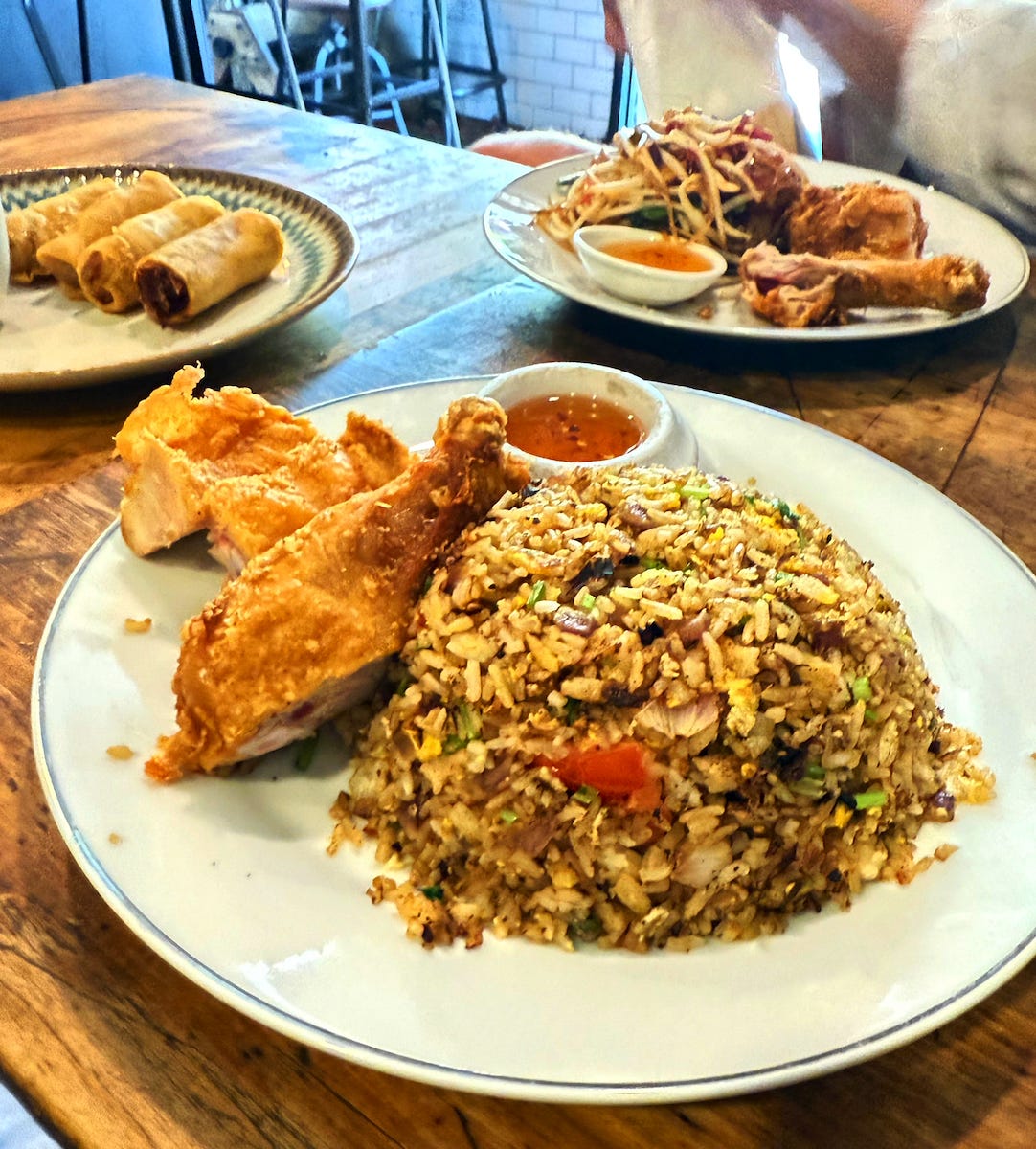
I visited the Guggenheim for the Rashid Johnson: A Poem for Deep Thinkers exhibit, and since I haven’t really been to East Harlem since I used to live there over 15 years ago, I stopped at Bangklyn for some Thai. I don’t think I’ve had better Thai in the city. I highly recommend the fried chicken and fried rice.
II. Sombr, I Barely Know Her
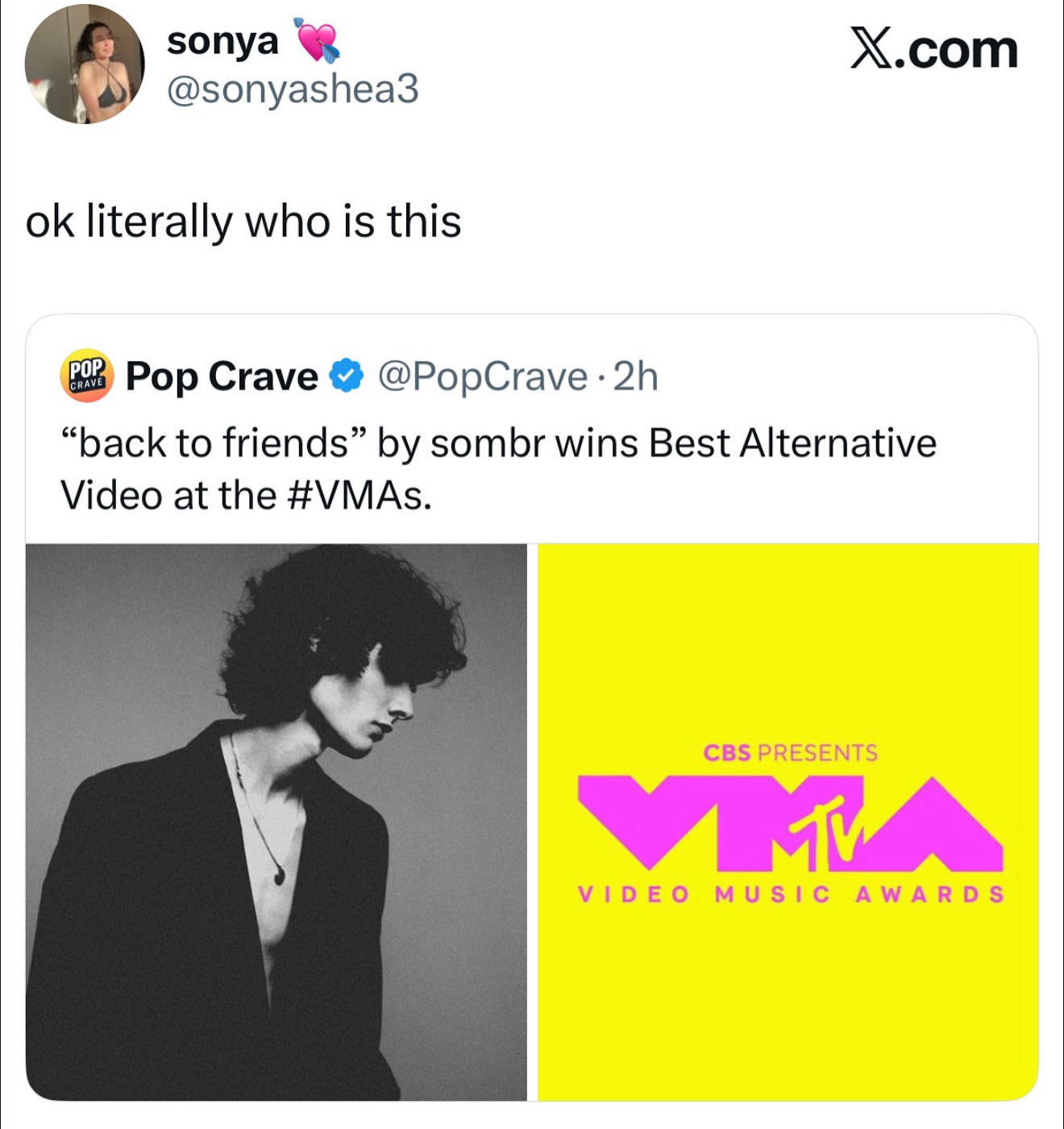
I had no idea who this man was when he appeared at the VMAs, but I loved his performance and texted a friend about it only to realize I’d been told to listen to his album by three separate people. At least I’m on board now! I love his slinky, Alex Turner/Julian Casabalancas vibe.
III. Audition
I mentioned how much I love Katie Kitamura’s Audition last week, and now we have a casting announcement for the film adaptation. Lulu Wang is directing Lucy Liu and Charles Melton. Fuck yes.
Ciao,
Ira the Third
We’ll never be rid of sexy cops as long as the Halloween industrial complex exists.
It felt like there was a moment in Highest 2 Lowest where the movie was going to turn and become GOOD and it...didn't? Also the music was so...strange for a movie about "the best ears in the business"? A great soundtrack could have made up some ground on this movie, maybe.
I’ve been hoping to get an Ira review of this movie! That was my first thought after seeing it, damn I wish Ira was on Keep It this week … I walked out of the movie with a big question about Lee’s point of view. I kept thinking no way he was asking us to see King as a hero after seeing him grapple with money over his godsons life. I didn’t like the feeling that Lee was asking or expecting that of us in the end.