

What was it that Harvey Dent said in The Dark Knight? “You either die a hero, or you live long enough to see yourself become the villain.” That applies to reality television stars, too. Death in this situation means you’ve left the show that made you famous, which is often the only way to keep public opinion of you intact. Ariana Madix discovered this when she became the doyenne of Vanderpump Rules in the wake of Scandoval, then became the show’s villain when producers, her castmates, and the audience were angry she wouldn’t play ball and film with her loser ex, Tom Sandoval. And given his recent antics, thank god for that.
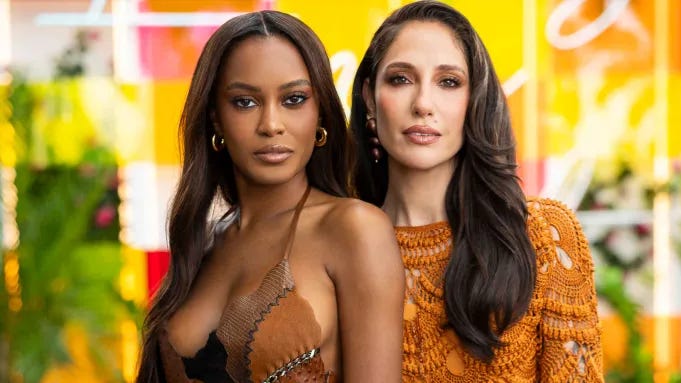
Enter Ciara Miller. The recent breakout star of Summer House, thanks to a cheating scandal of her own. Her ex, West Wilson, had an affair with Amanda Batula, Miller’s friend and fellow castmate Kyle Cooke’s wife. In the aftermath, Miller became pop culture’s heroine, and Summer House finally became a household name. Miller gained an influx of new fans, pushing her to over 1 million followers on Instagram, landing her a slew of brand deals and a hosting gig on Love Island: Aftersun (alongside Tefi Pessoa).
And that’s where the trouble began.
In the recent week of Love Island, the Casa Amor twist ended, and cast member Aniya Harvey found herself dumped by KC Chandler, who returned from Casa with a new partner, Tierra “Titi” Davis. Aniya’s friend, Trinity Tatum, launched a searing read of KC, and Titi ended up being hit by verbal shrapnel in the process. As a result, the internet — particularly Threads, which has grown exponentially as a place to live-post about reality television — exploded into heated debates about the interactions.
A problem has arisen for Love Island that’s not dissimilar to the conversation centered around Summer House. At some point, the reality television show has ceased to be entertainment and instead become a forum for viewers to compare their morality to the cast members and to debate race, gender, and sexuality. Reality television is often derided as cheap entertainment, so discussing how these shows reflect real-life politics is always welcome, but at what point do these shows stop being fun to watch? When the chief reason for watching Love Island has become an opportunity to engage in heated debates, what’s the point of the show? Do the cast members only exist as avatars now and not as three-dimensional human beings?
Aniya’s fans have decided that misogynoir is the reason viewers dislike her. Dating shows can be hard for dark-skinned women, and misogynoir is often a culprit when they find themselves without as many romantic options as other cast members. But misogynoir cannot be the sole reason why fans do not like someone on a reality show. Reality TV is very much about likability, and Aniya throwing insults at Titi about her “Fulani braids” and Bad Girls Club energy might be funny to some, but they might also come off as classist and just plain rude to others. Never mind that Aniya committed the cardinal sin of Love Island — not listening to a man the first time when he tells you to “explore” other connections. That means he is going to dump you, and you will be embarrassed. Aniya had a connection with Carl Schmidt from Casa Amor, but she chose to ignore that connection in the hopes that KC would return to her.
Was it out of actual feelings for KC? Probably not. Most of the cast members on this show locked in on couples immediately in the hopes of becoming fan favorites and winning the show. Aniya was most likely hedging her bets. And well, she lost.
Ciara Miller found herself on the receiving end of backlash because she didn’t properly drag KC for picking another option. Many fans attempted to compare Aniya and KC’s situation to Miller and Wilson’s situation, which is, frankly, insane. There are similarities, of course. Miller took a minute to wise up to the fact that Wilson was playing her on television. Aniya did the same with KC. But also, Miller and Wilson had a deep, years-long relationship and were not part of a dating competition show.
The irony, however, isn’t lost on me that Miller is facing backlash from parasocial Love Island fans, because these are the exact people who became new Summer House fans in the wake of the Wilson scandal. Reality TV, like social media, has become an outlet for people to live vicariously through the lives of others. At first, it involved enjoying their rich lifestyles and petty fights. And now, it has involved forcing your own bullshit onto situations where it doesn’t apply. I previously wrote about fans dragging their hatred of Wilson and Batula to a ludicrous point. Miller had not only moved on, but she was raking in cash and fame; she clearly no longer gives a fuck about her former friends. Yet, viewers could not stop commenting on Wilson and Batula. Whether it involved dissecting everything they did on television or stalking them in the streets of New York to send paparazzi photos to Deux Moi, an obsession was born that had very little to do with Miller.
It became about sticking it to Batula, who became an avatar for every white girl who has ever pissed you off. It became about sticking it to Wilson, who became an avatar for every white fuck boy you’ve ever dealt with. Even the praise of Miller and rallying around getting her Instagram followers wasn’t necessarily about her; it was about beating Batula’s follower count (she was already the most followed on Summer House before the incident, with 1 million).
Fans, upset about the racial dynamics in Summer House, launched petitions for the season’s reunion to feature someone besides Andy Cohen who could speak to issues of race. Fans have urged this for other Bravo series like The Real Housewives of Potomac when it comes to colorism. To me, it’s very infantilizing of the people who take part in these shows. On shows like The Real World, cast members used to get into debates about politics often, because they were equipped to do so. I think that if politics needs to be discussed at a reunion, then it should be the cast members themselves who bring it up. If cast members can recite talking points from Reddit to win arguments at the reunion, then they can pick up some bell hooks.
Those same fans naively believed that Miller would be the one to bring up their gripes on Aftersun and turn the light recap show into CNN NewsNight with Abby Phillip. She did not. Fans attacked her. Most of these fans, by the way, had no idea that Aftersun is just a fluff interview show. Because they’ve never watched it before. They started watching because of Miller’s involvement in the show, because they assumed that after defending Miller ad nauseam, she would do their bidding and rip KC to shreds for dumping Aniya. Miller and co-host Pessoa went to Threads to defend themselves against the backlash.
I’m not surprised that fans turned against Miller after championing her earlier this year; I’m just surprised it happened so quickly. The mob that builds you up and tears you down isn’t a new concept; it’s the very thing William Shakespeare wrote about in Julius Caesar. James Baldwin wrote that the play’s “tension it relentlessly sustains between individual ambition, self- conscious, deluded, idealistic, or corrupt, and the blind, mindless passion… drives the individual no less than it drives the mob.” If you have ambitions of reality television fame, you enter into a bargain with the mob — they can lift you or destroy you. It’s impossible to know which is coming, but that is the bargain you make in the hopes of a reward. In Caesar, it was the love and control of Rome. On reality TV, it’s the hope of becoming famous enough to make money off being yourself. In both situations, all you can do is beware.
Thank god for you, I felt I was going crazy this weekend. It was reminiscent of Huda defenders.