

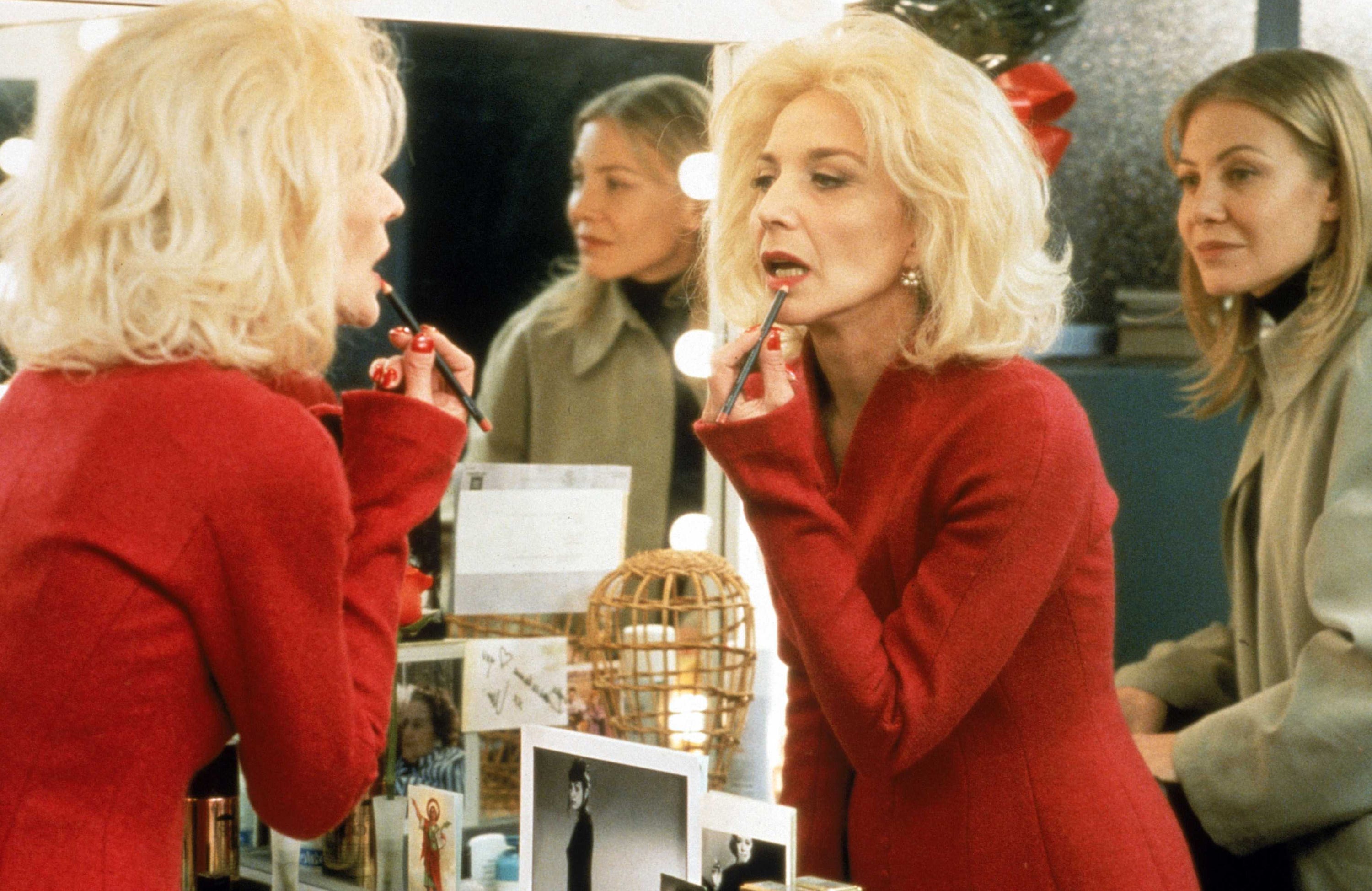
I had the opportunity to participate in Quad Cinema’s March Melodrama series, which included the films A Place in the Sun, Ali: Fear Eats the Soul, Written on the Wind, and All About My Mother.
I gave an introduction to A Place in the Sun, my first time doing this for a film, and I was truly rushing to get through it. I felt like people just wanted to watch the damn movie and not hear me talk, because despite a career of public speaking, it still gives me anxiety. Afterward, in the restroom, a patron told me, “We wanted to hear you talk more!”
I was asked to do another introduction, so this time I wrote out a mini-essay on my favorite Pedro Almodóvar film, All About My Mother. This time went much better, except I still have not perfected the art of not sweating profusely under bright lights. Maybe I need some damn forehead botox.
For those not in attendance at the sold-out screening, here is the introduction:
(The speech has been edited and expanded to include full quotes.)
This is a film I am always reranking in my mind. Each of Almodóvar’s films has a piece of my heart. Still, I’m always swapping out the Almodóvar in my Letterboxd top four with the hilarious Women on the Verge of a Nervous Breakdown or the toxically romantic Law of Desire. But I always come back to All About My Mother because it feels so perfectly realised.
The story’s construction, its vibrant colors, its emotional resonance that’s carried all the way to its closing dedication (“To Bette Davis, Gena Rowlands, Romy Schneider... To all actresses who have played actresses, to all women who act, to all men who act and become women, to all the people who want to be mothers. To my mother.”). When I first saw this film, it felt more “adult’ than his previous screwball films of the ‘90s or his ‘80s punk films. But the more I’ve watched, I find that this, in a way, works as a memory play.
It was around this time that Almodóvar said he had to stop his lifestyle of drugs and late nights. In a 2024 interview with The Guardian, he said: “I’d love to go back to those insane nights of the 80s, but I’d need a week to recover,” he says. “I don’t want to sound like it’s all about integrity or some priestly act – I did it because I wanted to. It was for the pleasure of writing and the enormous pleasure of making films.” He even evokes this personal resolution in one of his short stories, “The Mirror Ceremony,” from his collection The Last Dream, where a vampire abandons his nighttime revelry for life in a monastery1. Though are monasteries bastions of sobriety? Nunneries aren’t in his films, as we saw in Dark Habits! Notably, Nina is “hooked on junk,” and Huma is “hooked on Nina.” The film wrestles with addictions.
But Almodóvar doesn’t look back on his younger days with regret. If anything, it has inspired so much of the emotional resonance in his work. In a 1999 interview with Filmmaker, he describes why so much of the film’s action takes place backstage, in Huma’s dressing room: “The dressing room for me is like a center of the female universe. I very much like to see the actresses when they are making up or getting dressed. It’s very intimate. They talk. It seems to me that women can’t lie in a dressing room or in the toilet or in the kitchen. These are spaces in which you can only say the truth. I don’t know why. Like at a party, where women are usually in the kitchen talking about their husbands because they are more drunk than usual and are a little more sincere. And also in the bathroom in many situations, you are more sincere, talking about desires, like ‘I want to do that if possible,’ or ‘I want to sniff that if you invite me,’ or just talk in the bathroom about very important and serious matters. These are places that invite you to talk.”
I think that many of us know what people “sniff” in bathrooms or in kitchens at parties. If not from personal experience, then from witnessing it in an Almodóvar film! It’s how you form, in the words of Quadd Webb, “love, bonding, trust — real friendship.”
This film is about mothers, but it’s also about friendships forged among women and the ones that forged Almodóvar’s gifts as an artist. All About My Mother teaches you how to trust, how to love.
Recent updates:
I interviewed Charles Melton for L’Officiel Homme.
I wrote about the “singular” connection between Joni Mitchell and Princess Peach for Them.
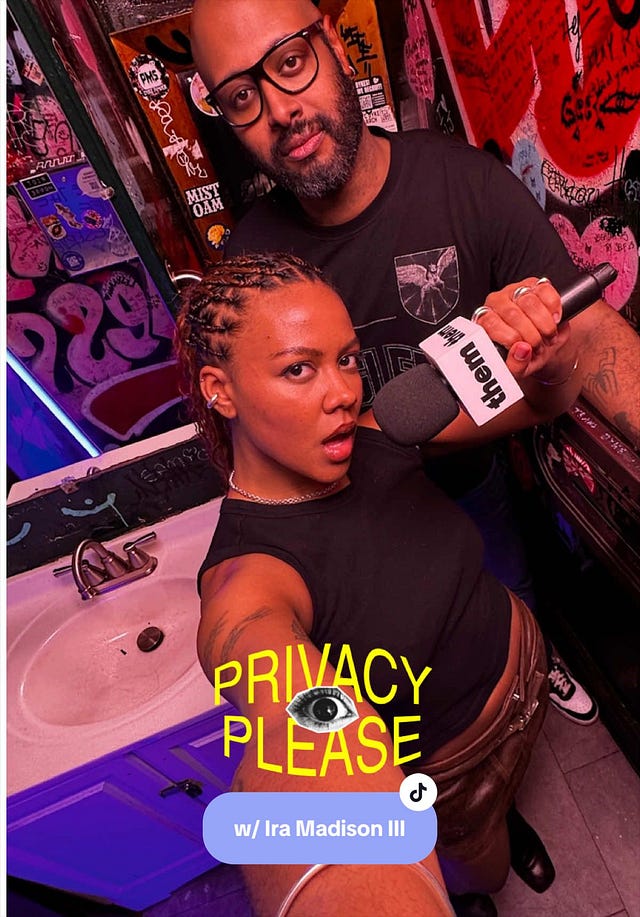
Peyton Dix interviewed me for Them’s new web series, Privacy Please.
 Tiktok failed to load.
Enable 3rd party cookies or use another browser
His upcoming film, “Bitter Christmas,” is based on another story in this collection.
I love this! Thank you for sharing. I live in California, so I'm jealous of those who attended the screening. All About My Mother is one of my favorite films. I remember catching a matinee at the Camera 3 Cinema (closed now, boo) in downtown San Jose when I was 18! Almodóvar blew me away and was instantly obsessed. I remember watching his Oscar win too. 💕